
The latest avant-garde literary trend
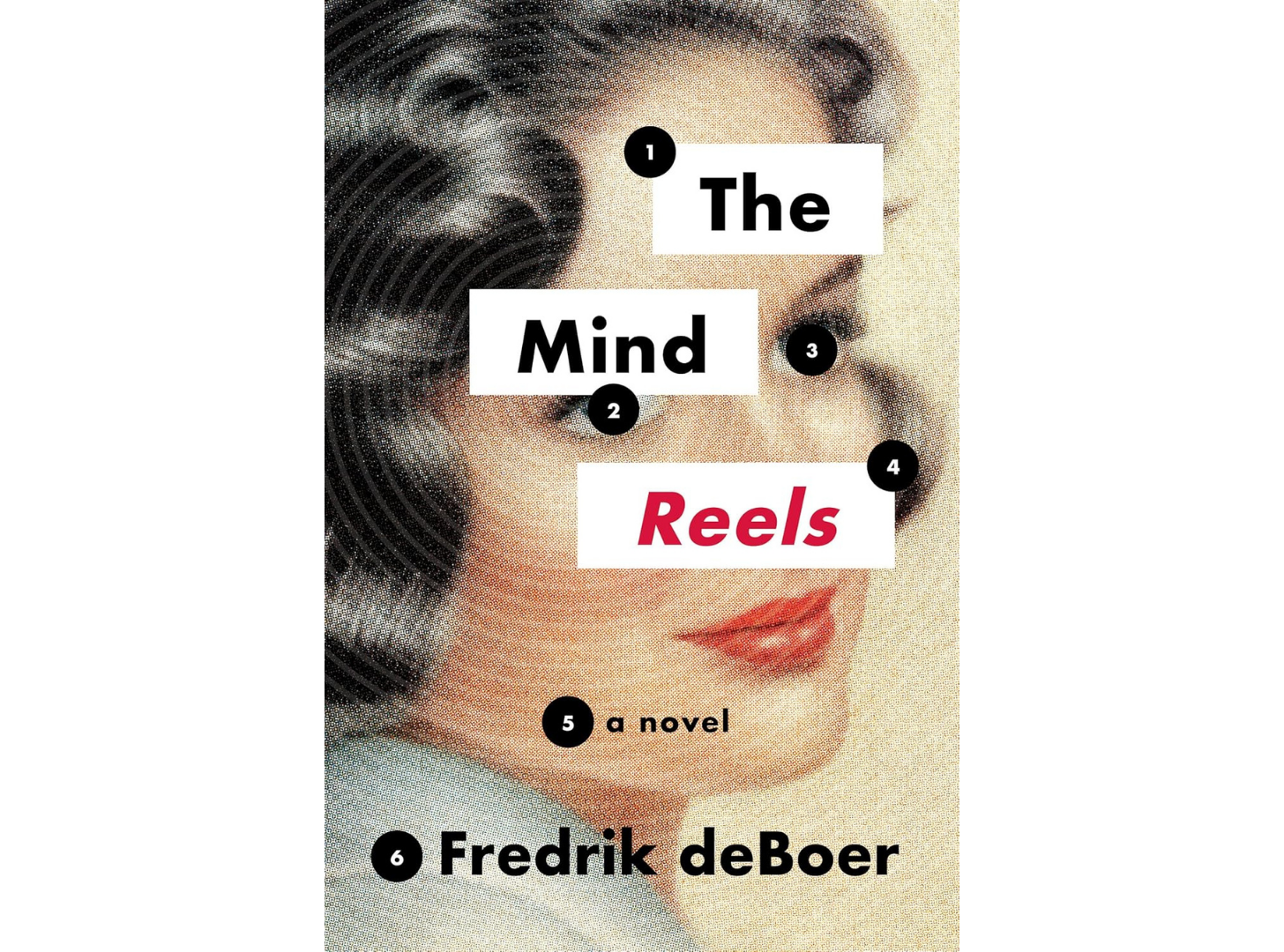
Freddie DeBoer’s debut novel, The Mind Reels, is about a girl, Alice, who slowly goes crazy, gets medicated, goes crazy again, gets medicated again, etc.
This girl is an everywoman. The book is very careful to situate her as being slightly above-average in every possible quality (looks, intelligence, popularity). And it’s careful to tell us that her childhood, too, was happy, but not exceptional.
Alice was never popular in high school, but she was kind and that kindness was rewarded by her peers, who treated her as someone who stood outside of the hierarchy, who lived to putter around the people who mattered and be her own kind self, and they rewarded her with compliments of her plain clothes and features, invitations to parties, rides home from football games. There was a part of her that knew she was being condescended to but she didn’t care.
Like Vincenzo Latronico’s Perfection, this is not a book about a person, it’s a book about a type.
And, like Perfection, it’s written in a very clean style. No particular sentence calls attention to itself. The aim isn’t to impress you, the aim is to tell a story.
You’re powered through the story by a simple question: “Is she going to be okay?”
I haven’t read enough stories about madness to know what usually happens in this type of tale. Last year, I read a novel, Elaine Kraf’s The Princess of 72nd Street, that’s also about a bipolar woman. In that case, the story ends upon an ambiguous note. The woman recovers, but you know that the madness will come again someday soon.
In this case, I’d actually read a review of The Mind Reels, by T. Benjamin White, that spoiled the ending, but I’d forgotten what he’d written! So I was running blind.
Because I follow DeBoer online, I’d heard a fair amount about the aims of this novel. I knew his intent was to avoid glamorizing mental illness—to show how dull and painful it could be. His description didn’t necessarily make me want to read the book (although I preordered it, just to support him), because I like glamorous things. Elaine Kraf’s book definitely glamorized insanity, and that’s part of why I liked it. There’s a beauty that hangs over insanity: a beauty that comes from floating down 72nd street, feeling like everything on this block belongs to you.
The Mind Reels has a little of that beautiful, floating feeling, but not very much. Mostly it has the other parts of madness: over a few months Alice destroys her friendships and ruins her grades, and then she needs put her life back together.
It’s surprising that this book works so well. This is a hard kind of book to write. Everything in the book feels very sketch-like, as if it’s just a quick impression. When she goes to a psych ward or a campus health center or works an office job, you think, “Ahh yes, this is exactly what those places are like”. There’s no particularity, no quirks. There’s no elements here that might call attention to itself.
The joys of the book are small joys. For instance, I found all her interactions with the health system to be darkly amusing. There’s the college residential staff who insist her real problem must be anxiety. There’s the ER doc who concludes she must be psychotic from abusing adderall. There’s the cut-rate therapist who insists the issue lies in her childhood. There’s the group-home counsellor who refuses to remember a patient’s chosen name.
I enjoyed the Oklahoma setting. I’ve only driven though Oklahoma and have never spent the night, so I can’t say if it was true-to-life, but I know the state is quite racially diverse, and it also has some fairly large cities. When the novel moved through the environments, it always felt, to me, like I was in a specific place, and not just in generic flyover-country.
It’s really the brisk pacing of the book that allows it to work so well. I admired its economy and its use of time. It felt like Michael Kohlhaas or Hadji Murad—one of those 19th-century novellas that move you swiftly through a person’s life.
The level of craft was surprising. I am used, especially in literary novels, to the book feeling baggy and unstructured. Here that wasn’t the case at all—after a few chapters I felt trust that the book would get me to the end in as little time as possible.

The highest of brows
It’s a bit funny that this novel is published by Coffee House Press, a nonprofit press, based in Minneapolis, that I associate with very high-brow, avant-garde books. For instance, they published Karen Tei Yamashita’s Circle K Stories, a fiction/nonfiction hybrid that’s mostly in English but has some chapters in Japanese and Portuguese. This book doesn’t feel avant-garde, it feels like an old-fashioned problem novel, a la the Dorothy Canfield Fisher book I wrote about last year.
But an avant-garde press like Coffee House exists precisely in order to publish books that are systematically overlooked by the mainstream, and it’s true that novels that are driven by overt concern for a social ill (’problem novels’) tend to be a hard sell at big presses.
You know, I often hear people complain that the last ten years have been full of novels that are about social problems: novels that are about oppression and woke stuff like that. But, as I noted in my piece about Fisher’s The Home-Maker, literary novels from big imprints are usually careful not to do what Freddie has done here. They try not to make the characters into an avatar of their class.
That’s why so many literary novels about marginalized people are about characters who are messy, alcoholic, lazy, or otherwise imperfect. For instance, the main character of Raven Leilani’s Luster is clearly a mediocre employee and perhaps deserves to get fired. The same goes for the main character in Brandon Taylor’s Real Life, who is certainly being bullied by his advisor and post-doc, but who is also far from the best student in the lab.
You actually don’t see that many characters like Alice who are good and who are purely a victim of misfortune. It’s clear, right from the outset, that Alice’s only real problem is this mental disorder. If it wasn’t for that, she would’ve had a very different outcome in life. Even in her progression through this disease, she is very typical, and she behaves in understandable and normal ways. There is no sense, within the book, that she is a major contributor to the misfortunes she suffers.

The New Problem Novel
Last year, I reviewed a self-published novel, Peter Shull’s Why Teach?, that verged on problem-novel territory, and it has a similar feel to Mind Reels (although Shull’s protagonist is a bit more distinct than Alice). Because I’ve now read two recently-published books with problem-novel qualities, I now feel free to opine wildly about the characteristics of a genre I will call ‘the new problem novel’ (which, to be clear, is composed of just two books)
What’s nice about the new problem novel is that it doesn’t hit the point too hard. The 21st-century problem novel has more humility than a work by a 20th-century progressive like Dorothy Canfield Fisher.
In Fisher’s book, The Home-Maker, the message is clear: different people are suited to different types of work, and if gender relations keep men from staying home to raise children, then that is bad—those gender relations ought to be altered.
In Why Teach?, Peter Shull’s protagonist, Will Able, is a journeyman teacher who’s deciding whether to throw off his profession and apply to law school. Obviously we know that teaching is good, but Shull doesn’t glamorize the profession. He makes it clear that this teacher’s fantasies of inspiring kids with a love of literature are indeed fantasies; although his students respect him as a teacher, they’re largely untouched by the subject matter.
Similarly, in DeBoer’s book, we see that Alice’s life is hard. Because she has this illness, she has a worse life than she’d otherwise have. The illness is all negative, no positive. She is not more sensitive because she was once psychotic. She does not learn any lessons, does not gain any special grace. She is unambiguously worse off than she would be if she wasn’t sick. And, furthermore, each episode robs her of a little more. Each episode costs her more stability, more friendships, more money. So she knows, after each recovery, that her life going forward will be a little worse than it would’ve been.1
Where the 20th-century problem novel was concerned with social relations, the 21st-century problem novel pays more attention to psychology. Alice’s situation is fixed. It’s hard to see how the world could be different in any way that would meaningfully improve her life. The novel isn’t a call to social action; its aim is to dramatize the internal conflicts of people like Alice.
Freddie DeBoer is primarily known as a nonfiction writer and blogger. I’ve never read his nonfiction books, but I’ve probably read hundreds of thousands of words of his blog. His voice on Substack is booming and maximalist; I was surprised that his voice in this novel is quite different. It’s very calm, restrained, and brisk.
The novel is slim, less than two hundred pages, and I read it in two hours, after putting my daughter to bed. Forget about braided narratives, autofiction, or gonzo weird fiction—apparently the problem novel is the most exciting new avant-garde trend, and if you want to be ahead of the curve you should check this one out.

On Book Reviews
Before choosing to read the book, I’d only seen one review of The Mind Reels. That review was posted by T. Benjamin White, a judge for the Samuel Richardson Award. He wrote a great review on his blog that has about 82 subscribers.
However, I just looked up The Mind Reels on Bookmarks, and I see now that even though it’s from a small press, this book has received an enviable amount of book coverage, with reviews from John Warner in The Chicago Tribune and Sam Sacks in the Wall Street Journal, and a mention by The New Yorker’s “Briefly Noted” section. Many large-press books don’t get this kind of attention, and most small-press books get zero coverage of this sort (Helen of Nowhere, which also came out from Coffee House last year, has no Bookmarks listing as Michael M——— noted.).
Much of this press is undoubtedly due to Freddie DeBoer’s popularity as a blogger. My own review is certainly downstream of the fact that I’m a fan of his blog and preordered his book in order to support him. Freddie is a subscriber to Woman of Letters as well, but I wouldn’t call us friends, or even friendly.
DeBoer recently ignited controversy with a post commenting on the press rollout for a January FSG release, Lost Lambs. He said (in essence) that the fix is in, and that some books get a lion share of the coverage because they’ve been chosen by mysterious unspecified backers.
Although I wouldn’t phrase things in quite the way Freddie DeBoer did, I also have complained about the existence of a hype machine for books. The publishing industry is dominated by a small number of large corporations. Each year, these corporations pick a few literary-fiction titles and give them big publicity campaigns. And these titles are disproportionately likely to receive coverage at mainstream outlets.
There’s been a lot of debate online about the merits of Freddie’s claims. And then those claims are complicated in turn by the fact that this kind of mainstream review coverage is decreasing. Yes, a lead title from FSG definitely had a better chance of getting a book review at The Washington Post, but…as of last week the Post doesn’t cover books anymore.
I am in sympathy with what Freddie is saying, but I don’t necessarily have any contribution to make to the discourse. It almost feels unfair to mention it here in my review of his very fine book, but I thought it’d be weird to just post a review without mentioning the weeks-long controversy he started on this very site about the matter of book coverage.
Woman of Letters reviews eight to ten new releases a year. In the last year I’ve covered Emperor of Gladness, Theatrics, The Golden Hour, The Trauma Plot, Woodworking, Perfection, Why Teach?, The Sleepers, Flesh). Not all my reviews are positive—sometimes I post a mixed or negative review. I think with a newsletter there’s an implicit promise of authenticity. I’m not being paid for my reviews; I only review books that I actually wanted to read, and I only praise a book that I actually enjoyed. I think that promise counts for something.
Here are some good sources of book coverage that I follow:
I wrote about The Whitney Review of New Writing a few weeks ago. That journal’s a great window into contemporary American avant-garde literature.
T. Benjamin White is just getting going, but I’ve been impressed by his reviews. He recently wrote a review of Lost Lambs.
Celine Nguyen reviews a lot of small-press titles and translated fiction.
Dhimmi Monde is relatively new, but they publish extremely high-quality reviews of small-press titles.
I, of course, always recommend The Metropolitan Review—they cover plenty of big-press books, but they also post reviews of many self-published books from writers in the Substack ecosystem.
emma is exceptional. She covers what feels like a dozen books every month, and she’s unfailingly true to her own idiosyncratic taste.
Abra McAndrew also reviews a good mix of frontlist and recent-backlist titles.
Henry Oliver isn’t primarily a reviewer, but he covers a fair number of front-list titles. I really trust his taste and always take it seriously—if Henry recommends a novel I usually check it out. Honestly, if you like Woman of Letters, you should probably be reading him as well.
I also follow a few Substackers (Chris Jesu Lee, Sam Kahn, Phil Christman, BDM and Michael Patrick Brady come to mind) who review a fair number of frontlist titles per year, though I wouldn’t say they were primarily review-blogs.
If anyone has book review outlets that they truly trust, please leave a comment (it helps if you briefly describe what sorts of books they tend to cover). They don’t need to be newsletters, since I am looking to expand my horizons and start reading more journals that aren’t part of the Substack ecosystem. If we get enough suggestions, I’ll compile the list and append it to a future post.

Elsewhere on the Internet…
My recent Substack post, “The New Yorker offered him a deal”, was mentioned by Stephen Metcalf on Slate’s Culture Gabfest podcast. He said:
This is tremendously good literary criticism, like very precise, very well researched…It’s an amazing work of literary history. But then it does something beautiful at the end. It says that by perfectly conforming to the format, Cheever was able to express his unique genius. And it does so very honestly. Right. It’s not sort of inflated terms about greatness or, you know… it’s all done with such precision and attention to material reality that by the end, you feel its appraisal of Cheever is as earned as anything possibly could be.
On a sidenote, T. Benjamin White hated the final pages of The Mind Reels, but I thought the ending was good and probably the only ending that would’ve worked. Sorry to be vague about this, but normally I can guess how a book is going to end, and in this case I couldn’t. It was fun to remain in suspense, so I decided to avoid spoilers in this review so other people could retain that surprise.
This idea of The Mind Reels / Why Teach having characters who are more truly "types" than other contemporary fiction is interesting. It gets at something that I've noticed, but haven't quite been able to articulate, where characters in so much modern fiction (particularly those which try to spotlight a social issue) are "flawed," but in a very safe way. Like, yeah, you aren't perfect, but it's because you don't believe in yourself or you can't suffer fools or something else that's actually sort of aspirational. It's less common for these characters to be unlikeable in the sense of actually being cruel to those around them, like Alice in The Mind Reels can be.
Also - thanks for the shoutouts!
I thought the book was almost completely unenjoyable but still, somehow, excellent. I had to divide myself from my usual desire of being absorbed by an interesting style or a thrilling narrative or characters with depth. But on the level of a being a problem novel, it completely succeeds. To put it as basically as possible, I felt and, more importantly, learned things. With me, it accomplished its goal. And it's not like I thought the writing was bad, not at all. Its passionless and detached prose kept me focused on the problem on display, rather than on the writing itself. There's a purity to the book. And, as you say, it was so different from FdB's blog posts (like you, I also bought it to support a writer I admire). Far from my usual thing, but perfectly accomplished and edifying. Anyway, good review!