
The future of literature belongs to amateurs
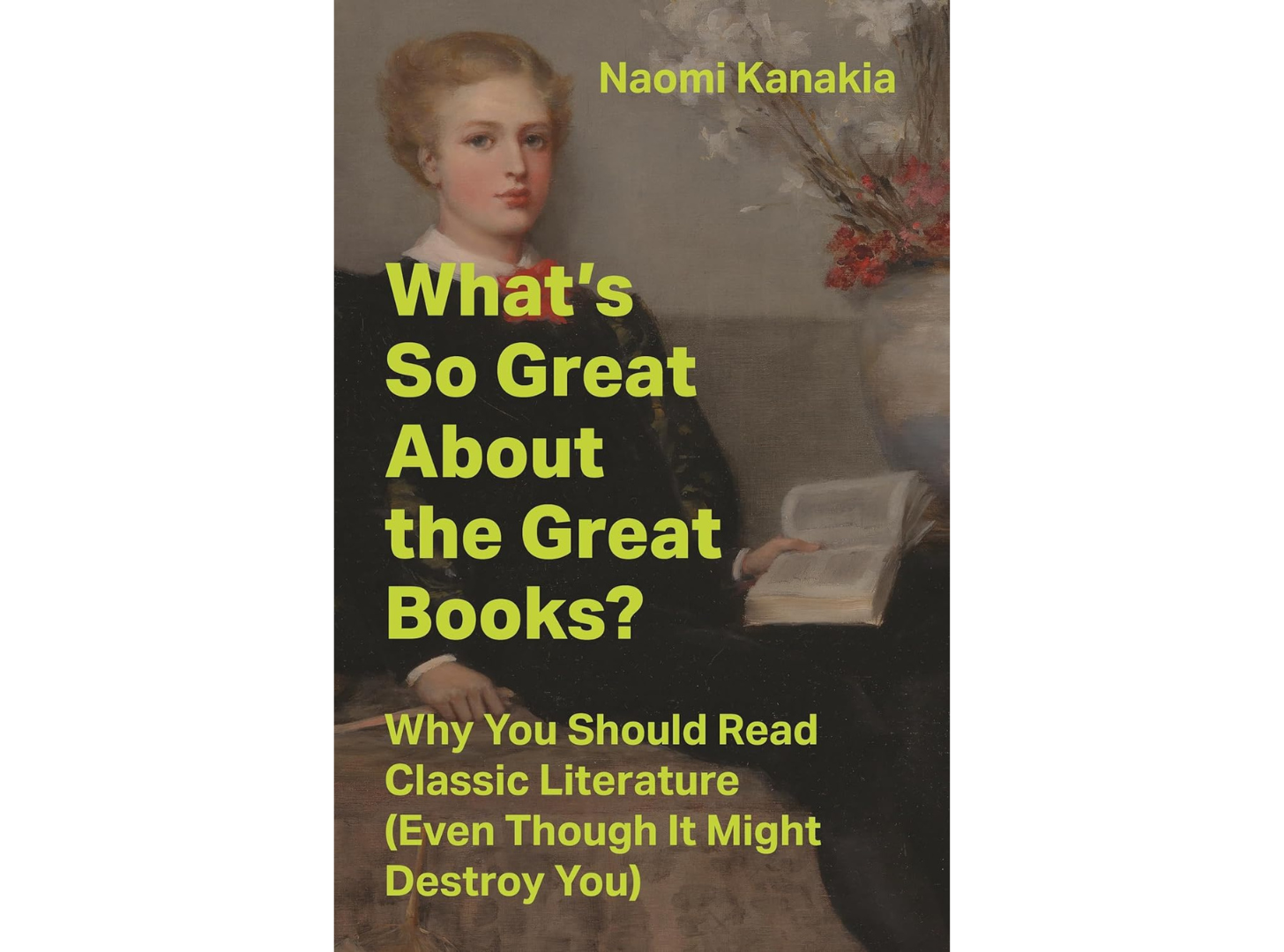
Reviews have started to arrive for my forthcoming non-fiction book, What’s So Great About The Great Books?
Kirkus is a trade journal that reviews most forthcoming releases—libraries and booksellers use it as a guide for what to order. The reviewers at Kirkus are always anonymous, so they can often be quite harsh.
However, they gave their seal of approval to my nonfiction book:
This is less a book about the Western canon or the goals of college than it is a personal journey of reading in search of that happy and a peaceful life. The author affirms values shared by all: straight and queer, cis and transgender, white and of color. The cultivation of taste and the appreciation of beauty are not, then, socially excluding practices. They are what gives us common ground. The Great Books don’t offer simple answers. They provoke complex reflections. In that act, we become, perhaps, not better people, but more accepting ones.
A convincing case for Great Books as the road to self-discovery and moral action.
Thank you, Kirkus, for leaving your knives at home for this one.

Three Substackers have also written up their reactions to the book:
I’ve been a fan of Kanakia’s newsletter, Woman of Letters, for a while, and this book is essentially a gigantic Woman of Letters post. So if you like that, you’ll like this. It’s written in her now instantly-recognizable voice; she approaches Literature in her matter-of-fact left-brain sort of way; there’s a refreshing and striking lack of pretense about the whole thing.
I predict that once you get started reading about Kanakia’s journey in self-education, you’ll be entranced. Her book is intimate and confessional, smooth as silk, and hard to put down. When my copy arrived in the mail, I shoved aside all my projects and became engrossed in her story: that of a plucky writer who faced down the Great Books on her own and found out they weren’t so scary after all.
What I deduced about the book’s goal is that Kanakia wants us to think for ourselves about the Great Books debate. It’d be hypocritical, in some sense, to write a book in which she explains to you how to appreciate the ambiguity and moral muddying of the Great Books.
The way I’d sum it up, in terms of what the experience is like and what it gives the reader, is that it’s very likely the sort of book I would re-read on a three-hour flight, every seven or eight years, and find that the voice is incredibly warm and affable and friendly and familiar…but that the book itself seems to be tilting toward something totally different from what I remember.

Q: Who should read this book?
A: If you’re reading Woman of Letters, you probably love to read books. But most people who love to read books are not sold on the Great Books concept. In my experience, most readers aren’t even aware of the Great Books concept. This concept—the idea of reading the world’s most influential and highly-regarded literary texts on your own, with minimal guidance, in translation—is not necessarily the most intuitive way to approach literature.
Usually, people approach literature through some community of practice. They’re part of a group of people, and they read the kinds of things that other people in this group like to read. For instance, when I was growing up, I loved science-fiction and fantasy books. Through the internet, I connected with the broader sci-fi community, and they guided me to the classics of the genre. I read deeply in the sci-fi field, in a way that came very naturally to me and that I didn’t necessarily perceive as “studying up”.
A lot of books that proselytize for classic literature have a tendency to ignore their audience’s preexisting relationship to literature. They assume that the reader isn’t purposeful in their reading, or doesn’t maintain any standards of value. I know that’s not true. The fact is, time is limited. Most people want to read good books, but that doesn’t mean they want to read the books that you consider good.
Growing up, I personally felt very condescended-to by the mainstream literary world, and, as a result, reading classic literature would’ve felt like losing a part of myself: why should I pay attention to your literature when you don’t pay attention to mine?
However, when I was twenty-three years old, I decided that I wanted to learn more about the history of literature. At that time, I embraced the Great Books idea and have spent seventeen years reading these books, which have profoundly shaped my worldview and my approach to literature. This book is my attempt to explain and proselytize for the Great Books idea. It’s meant for people like my younger self, people who love books, but who aren’t necessarily sold on the idea that they should spend a significant part of their life reading Euripides and Chaucer and Tolstoy and all these other old guys.
Q: So it’s about what books should be taught in college?
A: No, my book has nothing to do with that. I was an economics major. I did not study literature in college, and, if I’m being honest, the academic approach to literature has never resonated for me personally. Over time, I’ve grown to respect the work done by academics—I frequently rely on the work of English professors when I am doing research for my posts—but the approach I describe in my book is a fundamentally non-academic: you just read the Great Books as casually as you’d read anything else. I think this non-academic approach maximizes the accessibility of the classics while still offering plenty of rewards.
Q: I am interested in the book. How can I get it?
A: The book is coming out from Princeton University Press. They have some bookstore distribution, but I don’t know how much. To ensure you get a copy, you can preorder it here (Amazon / Bookshop) or through your local bookstore.

The future of literature belongs to amateurs
Thanks to everyone who read and shared my piece last week on ‘the New Yorker story’. It garnered favorable reactions from Michael Chabon, Ben Yagoda, John Warner, Daniel Oppenheimer, and others. The piece was also shared by Autostraddle, RealClearBooks, and by a user on r/TrueLit. After one week, the piece is already the most-viewed post in the Woman of Letters archive, and it has brought hundreds of new subscribers.
I was so exhausted after hitting ‘publish’ that I mostly stepped away from Substack and haven’t been responding to comments, but I did notice a few points that I wanted to address in a broader forum.
One Reddit commenter praised the piece, but said:
I am a bit confused about the substack economics, though. There isn’t a print publication that would be willing to publish this? Can she submit it after it’s posted to substack? It seems like it took a lot of time and work; can I assume that she doesn’t make her living primarily through substack?
My answer is that the experience of putting this piece together was quite time-consuming, but I never doubted that Woman of Letters was the right venue for it.
Last week Celine Nguyen wrote about realizing that many of her favorite literary journals were put together by people who weren’t really being paid for her labor:
I began to realize that many of the essays I read—in prestigious and well-known magazines—were edited and written and fact-checked by people barely able to make a living from their work.
In that essay, she asks how we can create a world where writers can get paid.
I don’t know. I would love that too. For five years, after selling my first young adult novel, I supported myself as a writer. But when my YA career ended, my writing stopped being a major contribution to our household finances. For the last five years, I’ve been supported by that great patron of the arts: my family.
Personally, I have my doubts that we will ever live in a society where you can make a middle-class living from long essays about ‘the New Yorker story’. So then…what does it mean to just accept that there’s no money in this?
Well, I think it means that we have to achieve sustainability through other means. In my case that means writing primarily for my blog, rather than for print publication.
The readership of Woman of Letters isn’t immense (11,000), but this is similar to the readership of many literary magazines (according to its media kit, n+1 has an average print run of 12,000). Moreover, although my blog doesn’t generate much income ($13k/year), that money at least comes without strings: I don’t have to file invoices or pitch pieces. I can just write whatever I want. Because I have this platform, I can pursue a long project on my own time, and I’m able to publish it once I decide that it’s ready.
One of the most taxing parts of writing for a print journal is that you can work on a piece for months without ever knowing for certain if they’ll publish it.
That’s because any journal that publishes literary essays tends to have some format for their essays. They want your work to fit into that format. So there’ll be many rounds of editing trying to maneuver your piece into a certain shape. And ultimately they may decide that your piece just doesn’t fit their vision. If you pitch it elsewhere, you face the same trouble all over again, with different editors and a different format.
This doesn’t happen because editors are evil. It happens because a publication’s readers are used to reading essays that are in a particular format, and it’s the editor’s job to make sure that readers’ expectations are met.
Personally, I think of myself as a kind of editor, and over the last two years I’ve developed a lot of expertise in the kinds of approaches that work with my own audience. Other editors are the same. I have no doubt that the edits the offer are very useful when it comes to shaping pieces to have the maximum impact within their publication.
With journal publication, the editors usually can’t offer much money, so instead they offer two things. The first thing (and this is especially true with the smaller journals) is membership in a community. If you publish in The Point, The Drift, or n+1 it makes you legible as a certain kind of person. And if you’re part of this community, then there must be a lot of joy in communicating with other members of this community.
And the second thing they offer is the potential for some career progress. The hope is that you, the writer, will prove yourself to them over time, and eventually you can convince them that you’re ready to write a big essay, something that could potentially get shared widely. They will help you shape this essay, and if everything goes well, the essay will go viral and land you a book deal or put you on the road to a staff job.
These two rewards—community in the present and the chance of career progress in the future—aren’t inconsiderable. That’s why so many writers pour their energies into writing for these journals.
For me, the fit just wasn’t right. It’s nobody’s fault. I’m like all these talented fiction writers who tried fruitlessly to get into The New Yorker. Some people don’t have the mind that’s needed to adapt themselves to the house style, and I’m one of those people.
Many of these periodicals that I’ve mentioned have a house style that’s somewhat academic. There is a certain voice that people with PhDs tend to use in their public-facing writing. It’s the voice of authority. It tends to have relatively formal diction and to involve reference to a lot of other writers and thinkers.
This is not really my style. My style is more minimalist. I just want to say whatever I am trying to say. I also try not to reference any writers who aren’t directly relevant to the issue at hand—there’s no need to bring Kant into an essay just because you happen to be talking about aesthetics.
The academic style has many adherents, and many people find it impressive. I find it to be impressive myself. But…there is room in the world for other approaches.
My main innovation, and really the source of all my success, is that I eschew authority. I don’t pretend to be someone who’s an expert on the things that I write about. You all are very aware that before three months ago, I’d hardly read any New Yorker stories—I have no interest in pretending to know more than I do.
Recently this came up in an interview I gave to Denise Robbins at The Creative Independent:
Denise: Do you have different standards of what counts as complete when you’re reading for “work” versus when you’re reading for pleasure?
Naomi: When you read an essay in the London Review of Books, New York Review of Books, or The New Yorker, it always feels like the writer read the book 10 years ago, is rereading it now, and has read everything there is to know about it…On my own Substack I try to steer clear of having that kind of authority. I try to be open about the fact that this is a book I just read yesterday. I’ve Googled it, I’ve read some other books and I have some opinions, but it’s essentially an amateur take. And that brings me a lot of peace because I’m not pretending to be a PhD or someone with a lot of authority.
I was in the midst of writing the New Yorker post when I gave this interview, and it was very much in my mind as I wrote.
For my longer non-fiction pieces on Woman of Letters I have my own format, this deep-dive format that I first used with my piece on the Western. This format usually starts with my personal experience of a text, and then it goes backward, to the beginning-point of the genre, and moves chronologically through the genre’s development, as I try to build some kind of point about how market constraints influenced the development of the major works in the genre. It’s a pop-nonfiction version of a sociology of literature approach.
This format doesn’t necessarily resemble the formats that are used by any existing magazine, something Daniel Oppenheimer noted in his reaction to my piece. He said:
This essay…is a kind of genre that seems native, at least in our era, to blogging and Substack. Like there’s something in the voice and the pacing of it that makes it very hard to imagine one of the major magazines publishing it. It’s too loose, too conversational, too explanatory in an unembarrassed way…
I find that when you’re posting on Substack, whether you’re posting fiction or non-fiction, it’s good if your pieces don’t resemble the pieces in magazines. I think that’s because if you write a really polished magazine-style piece, then the reader bounces off of it. They think, “I could be reading The New Yorker instead of this.”
However, that doesn’t mean my format is perfect. Between you and me, this New Yorker piece was very much shaped by some regrets I had about my piece on the Western. Looking back on the Westerns piece, I realized that I should’ve let it bake a little longer: I should’ve looked into the critical literature more, and I should’ve read Lonesome Dove before hitting publish. If I’d put in a month more effort, I could’ve created a more complete, higher-impact piece.
With the New Yorker piece I was determined to do as much research as I needed to. But then I faced the opposite problem. At some point I was doing so much research, so much reading, that it felt impossible to bring it together. I really had to return to my original New Yorker fave, John Cheever, to find a throughline for the essay. As it is, ninety percent of what I read didn’t make it into the book. Like, I read an entire collection by Robert Coates! Who’s that guy? I read a whole collection of stories from Smart Set, an early 20th century ‘smart’ magazine edited by H.L. Mencken. I probably didn’t need to read either of those books.
The New Yorker piece also benefited from two failures along the way. I tried to write similar pieces, at various points, about Louis L’Amour and about The Saturday Evening Post. In both cases, the piece didn’t come together, because my passion for the underlying work wasn’t strong enough. I learned that to write this kind of piece, you really need to love the underlying material and feel like it has enduring literary merit.
I don’t really know where this journey leads for me. I am fairly positive it won’t lead to, you know, a career as an eminent woman of letters. I am not going to become Lionel Trilling—I’m not even going to become Merve Emre. As I’ve written about before, I think we’re entering a world in which literature is going to be just another fandom—one amongst many—and it won’t necessarily have the privileged position that it’s held for at least the last hundred and fifty years.
That means a lot of the work of discussing literature is going to be work that people do for free. I don’t think that’s the way it should be, I just think that’s the way it is going to be. When we talk about the collapse of the magazine world, and the collapse of professional book reviewing, and the collapse of the academic humanities, then what does that add up to? It adds up to a world where very few people are paid to write about literature, and where the vast majority of literary work is conducted for free, for an audience of passionate fans.
I think the tradition embodied both by the remaining mass-market magazines (like The New Yorker) and by the niche intellectual magazines (like The Point) is a great one, but I learned from my years of pitching that my help wasn’t necessarily needed to continue those traditions. These types of magazines didn’t really want my labor.
Thankfully, I am now proud to be part of a very different tradition—the fanzine tradition—that I think will play an increasingly important role in the twenty-first century.
With these nonfiction pieces, I really do think like a fan. My aim is to capture whatever I enjoyed and find some way of transmitting that enjoyment to other people in a way that hopefully does justice to the underlying material.
I am proud of the work I’ve done on the nonfiction side of Woman of Letters, particularly over the last year, and I feel lucky that so many other people have responded to that work.
Thanks, as always, for your time and attention.
P.S. I’m taking the rest of the week off. My next post will come on February 10th.
The notion of an amateur renaissance—it's easier than ever (at least, in theory) to find an audience, but harder to make money—brings to mind a transition that happened in software in the 2000s and 2010s.
In the 1970s to '90s, software came in a box and it was expensive. You threw away the cardboard packaging that existed solely to give the product shelf presence, put a disk in your machine, and hoped to hell it actually worked. Today, the best products are often open source, and can be downloaded in seconds. The idea that people could make money by "giving away" source code, fifty years ago, would have seemed insane. In the 2020s, it's almost impossible to build a relevant product unless you give away the source code.
This isn't a case of self-destructive generosity. Companies get "free development" by using open-source software instead of building (and maintaining) everything internally, and elite software engineers do better as consultants on products they "gave away" than by trying to hand-sell products themselves.
It turns out, for an elite software engineer, to be better for your career to give software away and maximize exposure—and then be able to consult for $500 per hour—than to work on closed-source products. This is one of the reasons why open-source products are usually of much higher quality than closed-source counterparts.
The open question is whether a model like this works for literature. Consulting gives elite software engineers a way to write code—good code—"for free" and still survive. I don't know what the solution is for elite writers. Given that academia is slowly collapsing, the continuing reliance on teaching positions to fill that role is probably unwise. There has to be some model by which literary excellence is rewarded, but I sure as hell haven't found it, and the climate of publishing these days shows that no one else has either.
"It’s written in her now instantly-recognizable voice; she approaches Literature in her matter-of-fact left-brain sort of way; there’s a refreshing and striking lack of pretense about the whole thing." I'll have to check out the Isaac Kolding review, because this is the perfect description of your style.
"I am not going to become Lionel Trilling—I’m not even going to become Merve Emre." Good. You should be the next Naomi Kanakia.