
This AI-assisted writer had a very strong personal vision for her work
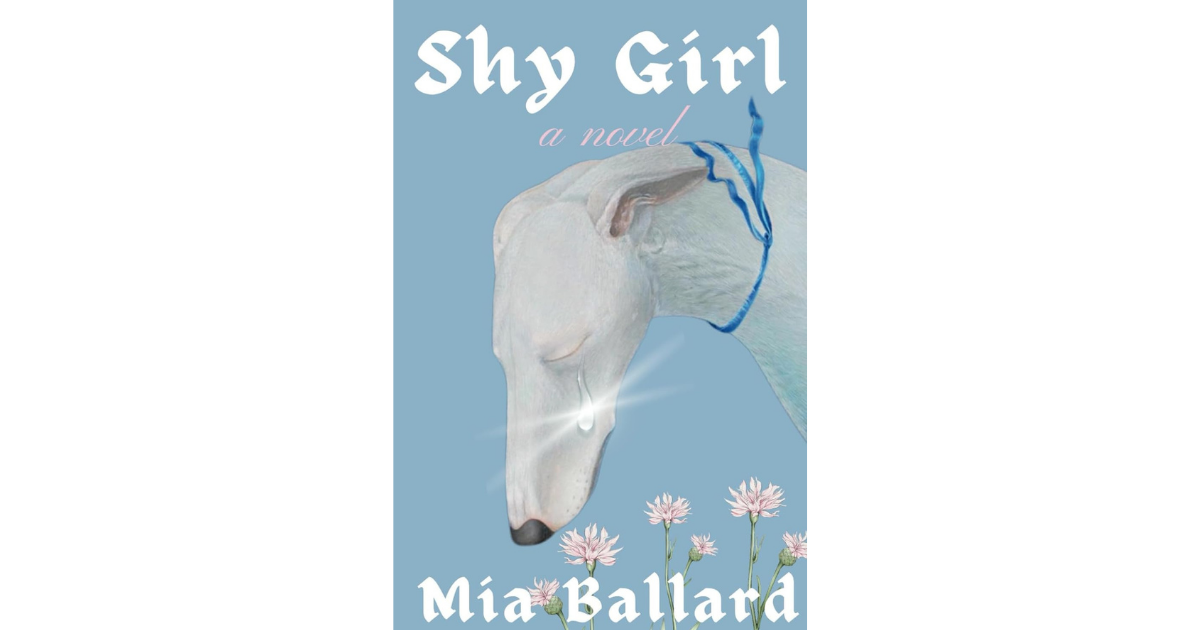
About a month ago, there was a novel that was withdrawn by its publisher, Hachette, because the book was written with the assistance of AI. I didn’t have many thoughts about this occurrence until I read Chandler Klang Smith’s review of the novel. She had done the incredible thing, that nobody else did, and actually gone and read the book.
From her review, I discovered that Mia Ballard’s Shy Girl has an insane premise. It’s about a sex worker who gets hired by a man to sexually role-play as his dog. But then he locks her up and keeps her captive for seven years.
I was a bit amazed that a big corporate press would publish this, since it’s obviously the author’s sexual fantasy. You know, the treatment of the subject isn’t overtly erotic, there aren’t a lot of stroke scenes (I hunted down a copy of the book and looked through it), but the overall scenario is basically an erotic scenario and the protagonist seems like a self-insert for the author (her physical description resembles Ballard’s author photo).
I found myself kind of admiring the book. Yes, it’s hard to read because it has that uncanny AI voice. But at the same time it is very brave to release something that so clearly seems like a sexual fantasy.
I should clarify that, in the novel, the woman isn’t particularly aroused by the situation, but, to me, that makes sense for this kind of book. In real life, if you’re interested in being sexually objectified as a dog, then you need to pursue it as a fantasy, as a roleplay, with strictly defined limits that make clear everything is in good fun. But if you’re going to write a novel about that fantasy, then it’s more arousing to write it as reality, with no consent and no limits. What if it actually happened! What would it be like?
In the novel, the main character struggles to escape her captor’s control—in the author’s note, Ballard goes out of her way to say she sees the novel as empowering “assertion of autonomy in a world that often strips women of choice, dignity, and freedom”)—but to my eyes many parts of the story read like erotica, and there’s another character in the story, Cupcake, who’s fully bought in to the fantasy and in love with her captor.
It’s probably too reductive to call the book an outright erotic fantasy, but it does feel like it’s cutting very close to the author’s desires.
A excerpt from Shy Girl
For the first time, I’m alone and not on a leash. My eyes dart to the boarded windows, the vanity, the room itself, scanning for something—anything—that might help me escape. But the door swings open again before I can move, and Nathan returns, holding something in his hands.
A collar.
It’s pink, thick, with a silver heart dangling from the center. The charm glints in the light, the word Shy Girl engraved in delicate cursive.
Nathan holds it up like a trophy, his grin now sharper, crueler. “You are no longer Gia,” he says, his voice steady. “From now on, your name is Shy Girl. Got it?”
I nod, the motion quick, mechanical. “Woof,” I say, my voice trembling but firm enough to satisfy him.

As I browsed this book, I found myself thinking, “This book seems to come from deep in the author’s psyche, to a degree that feels quite unusual for a traditionally-published book. And what does it mean that this deeply personal book was apparently written with AI assistance?”
My second thought was that perhaps I am mistaken in seeing this book as unusual in its subject matter. Maybe there are lots of traditionally-published books that have outrageous nonconsensual dominance fantasies, but I have never heard about them, because they didn’t make the news due to an AI scandal.
However, this book started as a self-published novel. It only got republished by Hachette because it got heat in the self-pub world. And that makes me think that it was filling some kind of gap. Like there’s obviously room out there for books that aren’t sold as erotica, but which eroticize nonconsensual sexual situations with a wink-wink nudge-nudge of plausible deniability.
In the literary world, a similar book that comes to mind is A Little Life. This is also a book that was full of nonconsensual sexual situations, which it related in a closed-off, detached way. You weren’t necessarily meant to be aroused by the sex, but the situation as a whole—Jude’s utter abjection—is very compelling (I reviewed A Little Life earlier this year).
That was also a book that came very close to being in poor taste. The editor of the book, Gerry Howard, really wanted the author, Hanya Yanagihara, to tone down the rape and torture, but she refused.

I feel like the broader lesson here is that most people who are capable of writing a competent novel are unwilling to write something like Shy Girl or A Little Life. Something about the process of becoming a good writer tends to domesticate the imagination, so you become wedded to certain norms of taste that make it impossible to imagine releasing a book that might reflect poorly on you the way Shy Girl and A Little Life could’ve reflected poorly on their authors.
Most authors would be mortified to have to have their name attached to a novel with Shy Girl’s premise. Like, can you imagine querying agents telling them about your sex slave dog book? Can you imagine reading reviews for this sex slave dog book that you’ve written? Can you imagine having the sex slave dog book attached to your authorial identity forever? Even without the AI scandal, this book’s premise would be a lot to live down.
Becoming a good writer means caring what other people might think of your work. And once you’ve been taught what a ‘good’ novel looks like, it’s very hard to fully let go of that idea so you can write about the part of your psyche that wants to be penned up like a dog.
Obviously a great writer is able to forget themselves and write whatever they need to. A Little Life wasn’t written with AI—Hanya is just a great writer who’s somehow able to tame her kink and make it conform, to some extent, to the norms of the literary novel. But if you’re not great like Hanya, now you still have the option of just guiding AI through the process of turning your fantasy into a competently-told work of fictional prose.
Right now, millions of people are probably engaged in AI-assisted fantasizing just to get their rocks off. And over the next few years, some of those people will master the art of erotic prompting to such a degree that they start thinking, “I bet other people would pay money for the text I am producing.” And oftentimes they will be right!
This AI-assisted erotica probably won’t be better than fully-human writing on the level of structure or storytelling or voice, but it is very possible that it will come across, at least to some readers, as being more authentic and unselfconscious, precisely because it seems to spring directly from the part of the human psyche that doesn’t usually get the chance to author a book.
This is so interesting, and I've been thinking about it a lot. Clearly, this is not a premise that came out of an AI even though the writing did.
On that level more than AI, the existence of this book is related to the absolute enormous explosion of weird erotica since the invention of the internet and women being able to put our erotic fantasies out into the world anonymously. As far as we can tell, from conventional male-directed porn vs what happens in women's erotic online writing: in general men like roughly ten different things, and women like an absolute infinity of incredibly polymorphously perverse stuff. (I say this with great pride and enjoyment.)
My earliest (anonymous) published works were in online slash fiction. My agent and I have actually had conversations about whether I could or should write erotica (which apparently we must call 'romantasy' for the time being), whether it's sufficiently in the mainstream now for it not to trash my reputation. It sort of sneaks into my literary work, but deniably. In the same way that it's sort of deniable (A Little Life) if your fantasy is all about men - "this isn't about me," one can say, "because I am a woman, how silly of you".
I would say, for me, it's certainly not a domesticated imagination, as much as it is an awareness of what is acceptable for a woman to write without slipping into the category of sex worker, which is, of course, a terribly stigmatised group.
(Wuthering Heights is also an example of the terrifying-to-society power of a woman writing the absolute filth of her daydreams.)
I find it a bit exciting that there might come a time where it would not trash my literary reputation?
It perhaps also feels relevant that I have never been able to read A Little Life. I think I would have felt much more comfortable with the idea of it if it had been presented as a sexual fantasy, which I could enjoy without placing myself in the mental position I'm in when reading realist or modernist fiction. Fantasy is a place of transgressive play. A realist novel about horrific abuse leading to suicide is an invitation into an abyss for me.
We'll have to agree to disagree on A Little Life. But it did get me thinking about good writing that has felt like unshackled Id.
The two examples that come to mind immediately are from TV shows - NBC's Hannibal and Richard Gadd's ongoing Half Man. They both have that quality of feeling very personal, and very erotic.
In novels, weirdly I find myself thinking of Moby Dick. Yes, it's not explicitly sexual, but there's something deeply personal and deeply sensual in its treatment of whaling, community, whale anatomy, to say nothing of Queequeg.