
Neglected Books
Let’s imagine that you’re an aspiring writer from Lincoln, Nebraska.
You move to New York and publish two well-received novels in your twenties. You work a few years on contract at MGM, writing movie scripts (nothing gets made while you’re there). Then you move back to New York and spend the next decade writing light short stories—often satires or romances—for popular magazines. You write another novel, but your publisher passes, saying (essentially) that your work has no depth. After a breakup, you suffer a severe depression, spend two years in a mental asylum.
After you get out, you ghostwrite a memoir for a famous brothel-keeper (but are never paid for the work), and then go west, spending three years in a motel in California, where you take six hundred pages of notes for a study of Willa Cather (that you never write).
You’re now forty-two. And you return home to Nebraska, where you’re offered a job at University of Nebraska press. You find love again, this time with an English professor, and you spend the next two decades working at the press, where you reprint a lot of Willa Cather’s backlist and try to encourage scholars (including your now-partner) to write books about Cather. Over time, you become one of the world’s biggest experts on Willa Cather—but this entails a lot of wrangling with other Cather experts and with the Cather estate. You have a harsh, caustic side, which often comes out in your dealings with writers and with other editors at your press—you work hard, make few friends, and are eventually forced out by the new director of your press. A month later, you die.
Is this a good life?

I don’t know. But it’s a great book.
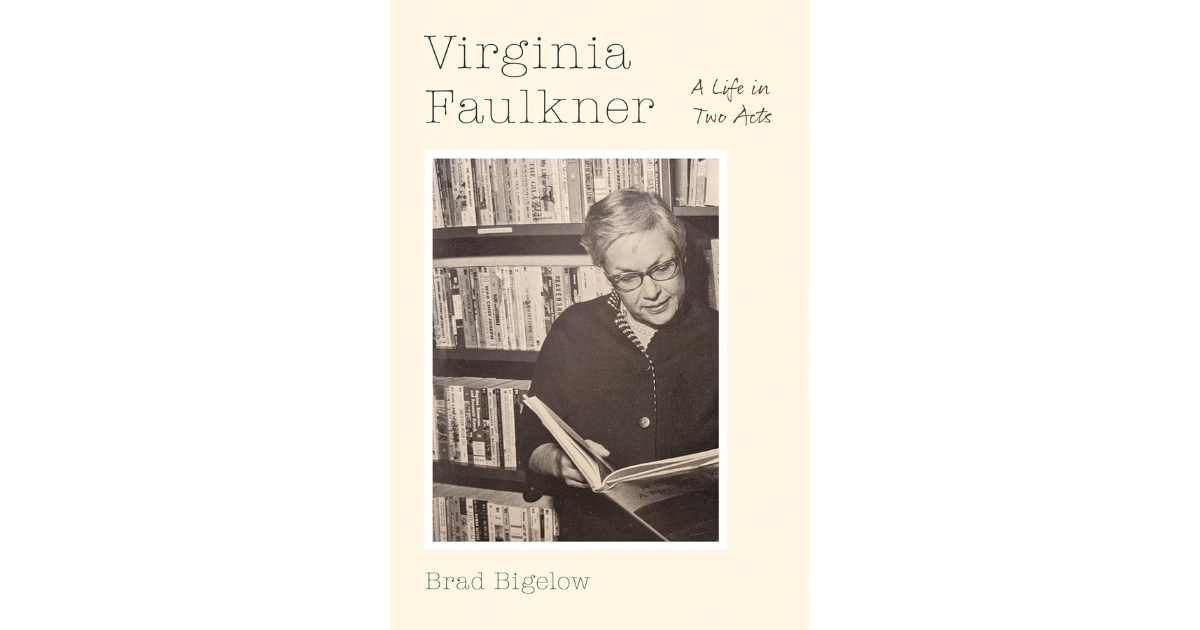
The life I’ve outlined is drawn from Brad Bigelow’s recently-published biography, Virginia Faulkner: A Life In Two Acts.
Faulkner (no relation to William) is an odd choice for a biography. I’m sure there are other biographies that are about minor literary figures, but this is certainly the most marginal literary biography I’ve ever read. Faulkner’s work is out of print, and Bigelow himself admits in the book that it’s not really worth of rehabilitation. She is not an underappreciated or overlooked writer: she’s a writer who was mostly dismissed, even in her lifetime, as a minor talent, and who ultimately dismissed herself as a minor talent too (and as a result quit writing fiction entirely during the last three decades of her life).
So why write about her? Well, Brad Bigelow runs an incredible blog, The Neglected Books Archive, which reviews out of print books. In 2008, he read a collection of Virginia Faulkner’s magazine pieces, about a recurring character named Princess Tulip who functions as a send-up of the international Smart Set. But when he researched the author of this book, he found something odd:
I learned that she was born in Lincoln…worked for the Washington Post, Town and Country magazine in New York, and MGM in Hollywood; wrote several novels and a Broadway play in addition to My Hey-Day; then worked as an editor at the University of Nebraska Press from 1956 until her death in 1980. That last bit stuck in my head. It seemed an odd trajectory: Washington, New York City, Hollywood … and then the University of Nebraska Press?
In early 2020, while taking a class in the Creative Nonfiction program at the University of East Anglia, he remembered Virginia Faulkner and challenged himself to learn as much as it was possible to learn about her from online, digitized mentions in various Lincoln, Nebraska newspapers.
He got drawn further and further into researching Faulkner’s life, and eventually he came to a crossroads:
In the course of researching Virginia Faulkner’s life, I realized that my task was not, as I thought originally, to write a literary biography. A literary biography…tries to illuminate a writer’s work through the context of their life. In Virginia’s case, however, her novels and short stories, however funny and well-crafted, were simply not of the caliber to merit close critical study….
The reason for writing Virginia’s story was simpler than to illuminate her work: it was to tell her story, the story of a woman of ferocious wit and intelligence who struggled with alcoholism and depression and had the courage to start again at the age of 42, setting aside her own career as a writer and devoting her energy to advancing the work of Willa Cather and the numerous writers she guided as an editor of genius.
It’s clear that Bigelow thinks that her work at the University of Nebraska press was much more important than her own written work, and that’s why he chooses to devote more than half the book to Faulkner’s life after moving back to Nebraska at age forty-two.

This decision to focus on Nebraska was completely correct
The first act of the book, detailing her childhood and her time as a fiction writer and screenwriter, is interesting—I don’t want to sell it short—the book moves very briskly. But even in this first half, the most interesting part is the portion that’s set in Lincoln, where her grandfather and father and uncles were all local notables, who ran an insurance company. The way Bigelow portrayed these Nebraska gentry was pretty fascinating. They’re always founding fraternities and leagues and country clubs and just slowly building out the life of this town. It feels like you’re reading Winesburg, Ohio or Main Street, but spread over just forty pages.
Then when Faulkner leaves Lincoln, the story becomes sketchier. She works briefly as a reporter in DC. She moves to New York. She drinks a lot. She moves to LA. She drinks a lot. She has a lesbian awakening, and, back in New York, she becomes partnered to Dana Suess, a pianist and composer. Faulkner struggles to try and write something that has more depth to it. When her partner leaves her, she has a crack-up, gives up writing fiction, and (after a circuitous path that involves ghost-writing a famous madam’s memoir) she returns home.
The second half of the book, when she’s an editor at University of Nebraska press, is much more lively and fascinating. I think because it’s a world that I’ve never seen written about before. I already know, more or less, the story of an alcoholic writer who never quite gets their head above water. That’s the story of John Cheever, the story of Dorothy Parker, the story of so many other writers.
But the university press editor is something else! First of all, this second section begins on a really sweet note. Faulkner meets Bernice Slote, an English professor at UNL, and they slowly become companions. One of Bigelow’s talents in this book is for painting a portrait of a character, and he devotes a dozen pages to Bernice Slote’s early life: she’s also from Nebraska, and her father died at a young age. Unlike Faulkner, she doesn’t have money, so she goes to work teaching high school, and she gets her master’s degree at night.
While Virginia was in New York and Hollywood, socializing with the likes of Garbo and Tallulah Bankhead, Bernice was supervising the yearbook, playing piano accompaniment for student productions, and organizing ice cream socials. She was the faculty sponsor for the Ord Oracle, the one-page high school news that appeared in the pages of the town’s paper, the Quiz.
She becomes a published poet, with work in The Atlantic Monthly and other major periodicals, and gets a job at a community college, and then at UNL (this was back when you could become a tenure-track college professor even if you only had a master’s). And her personality is sweet, open-hearted. She wins award for her teaching.
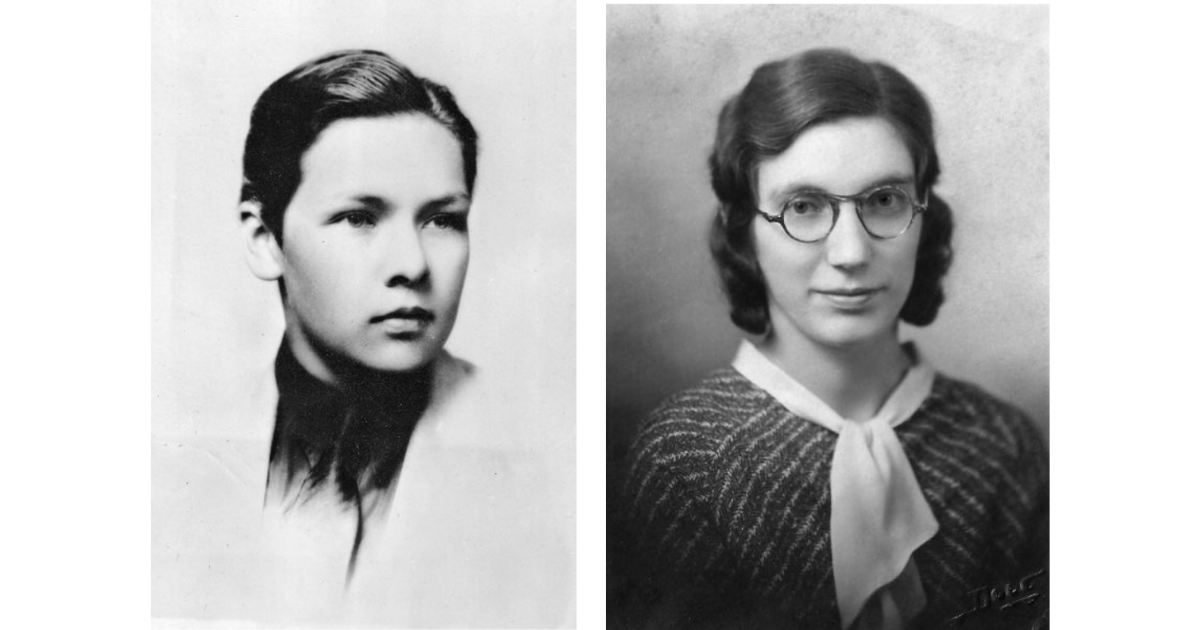
Slote was completely different from Faulkner, who turns into a terror at this university press.
Indeed, in her work at this press, an awful side of Faulkner’s personality comes out. The portrait painted by Bigelow is really not appetizing. One writer tells her that the experience of working with her was so shattering that it led to “an utter loss of confidence” and revealed to him that “I am not a scholar” but merely “an average teacher”.
Bigelow also reports her difficulties getting along with several colleagues, Kaste and Spatz, who were hired to assist her:
Kaste left after too many tongue-lashings from Virginia, moving across town to Centennial Publications, the publisher of Cliff’s Notes. Spatz lasted just three months, managing in that time to disappoint Virginia so completely that she sent Nicoll a thirteen-page report that detailed Spatz’s failings in even the most basic editorial tasks and questioned her sanity. Over the coming years, the personnel files of the press would be filled with similarly lengthy and critical assessments by Virginia of other assistant editors and copy editors.
So it’s really good that she has Bernice Slote in her life, because it shows that at least someone loves her. And Slote really does become a partner in every sense, because they both become very involved in the effort to preserve and extent the reputation of a fellow Nebraska writer, Willa Cather.
There’s many pages of description (which I found fascinating) of their dealings with the other local Cather expert, Mildred Bennett (who runs the Willa Cather Foundation and has an annual Cather conference in the author’s home town of Red Cloud, Nebraska). They’re constantly embarking on collaborations with Mildred, and then slowly trying to muscle her out, because they think she’s not much of a writer or a thinker. (Alfred Knopf, in a letter to Faulkner, says Mildred is an example of “what happens so often after a truly distinguished author’s death: a second- or third-rate person latches on to his or her memory with great energy and industry.”)
Then there’s all the wrangling with Cather’s estate and her publisher. They always have to think about Cather books that the estate will do. As Cather material enters into the public domain, they try to publish it, but they need to do it in ways that won’t piss off the estate, because then the result will be that they won’t be able to get permissions to license or reprint still-copyrighted material.
I love Willa Cather’s work, and it was quite fascinating to see how her reputation developed. My sense is that she was a relatively popular author right up to her death in 1947, and she remained a popular author afterwards, with her major works still in print, but she was not regarded as an important author. For instance, there’s an anecdote about a scholar being discouraged from doing their dissertation on Cather, because their advisor thinks she doesn’t merit it. And there’s no biographies of her, no full-length critical books about her either. There’s a small cottage industry of people presenting papers, but that’s it, and much of the Willa Cather critical apparatus is contained in the prefaces and appendixes to these reprints that’re done by Faulkner and Slote at University of Nebraska Press.
And that slow insistent work, of having these conferences every year and producing these books and these papers, is what keeps Cather in the public eye. Because even if people don’t take her seriously, they at least have to acknowledge that someone is taking her seriously.
In fact, Faulkner’s insistence on Cather’s value becomes somewhat of a joke:
The novelist Shirley Schoonover, having only recently left Lincoln for Rochester, New York, published a “Letter from Nebraska” in the New York Times that asserted, “There are a couple of women associated with the University of Nebraska Press who do endless research on Willa Cather. And if you don’t love Willa Cather’s work you are not included in the literary life of the university.”
But that work pays off. That work is part of the reason that Cather’s reputation grows in comparison to contemporaries like Edna Ferber or Sinclair Lewis—those guys don’t have this cottage industry of people insisting on their worth (or at least not to the same degree).
Obviously, you can never know for sure, but I found it very believable that it was due to Virginia Faulkner, Bernice Slote, and Mildred Bennett that Cather has such a secure place today in the American canon. She really does feel unique. As I wrote in my piece on Edna Ferber, there is a type of middle-class realism that was (and still is!) the dominant style in American fiction over the last hundred years, and very few writers in this vein have really forged an enduring critical reputation--Cather is probably the only practitioner of this type of fiction whose critical reputation is truly secure.

Anyway, the book is incredible
My daughter was home sick on Friday, and I read this book over the course of a few hours while my girl watched Sing and Moana 2. I was gripped. The writing is really sharp. I couldn’t believe the level of compression and the types of details that Bigelow managed. Even though there was sketchiness in some places, he still gave the illusion that he knew absolutely everything about her life.
And as a portrait of both life in a midwestern university town and life in mid-century academia, it was superb. The book read like a novel. It was honestly a lot like reading Stoner, because it was suffused with the same kind of quiet melancholy. But...in the end, there was more hope and more joy. I think, ultimately, it was a good life. It’s a life to be proud of. Yes, Faulkner had a harsh personality, especially when it came to her editorial work, but maybe that’s what the job needed.
In any case, I have met many officious and annoying academics, and it’s nice to get a peek behind the curtain and think about what kinds of disappointments and ambitions might’ve been driving those people. This book does honor not just to Faulkner, but to a whole swathe of American literary life that is composed of people, like Faulkner and Slote, who carefully devote themselves to marginal literary activity, because...well...because they’re paid to do it, but also because it feels somehow meaningful, like it matters.
And although their names aren’t famous, their work is written into the canon, in the form of Willa Cather. They chose her, because she represents people like them. She has an entire novel, The Professor’s House, that’s in part about this kind of painstaking, unheralded intellectual labor. It’s about an old professor, who’s left alone, and who’s been passed-over by his own era. I read this novel, The Professor’s House, in part because of the work of people like Faulkner and Slote. If you devote your life to an author, then that really does matter. Yes, we joke about how there’s a Cormac McCarthy guy (Aaron Gwyn) and how there’s Thomas Bernhard guys and Philip Roth guys and whatnot—but if an author is going to survive, then they to eventually acquire a guy who’ll be utterly tedious about insisting publicly on that author’s importance.
And as a portrait of a devoted Willa Cather gal, this book is exemplary, and I think fulfills a valuable literary function.

The Neglected Books Archive is also excellent
I’ve been running across this site for years, when googling various obscure authors, and it feels by now like an old friend. The site is quite strange—it’s basically a Wordpress site, and feels like a remnant of the first blogging era. There’s also a mysterious quality to the site—for years Brad’s name was nowhere on it and even the contact email was just for editor@neglectedbooks.com, so the site felt very anonymous (although it was written up by the New Yorker about ten years ago!).
What makes the site good is the honesty. The site itself is not about rehabilitating any particular author’s reputation. Instead it’s just about bearing witness to these books that’re no longer with us. Brad has a pretty good sense for what kinds of books are interesting to write about, and all the reviews are quite engaging—some of them really make me want to hunt up the book—but he’s very clear-eyed and open about the literary merits of these various books.
That same honesty is on display in this book. I was honestly a bit shocked, at times, by how poorly Faulkner came off. There was certainly an ambiguity here about whether the harm she did—including to her authors and to Mildred Bennett—was really outweighed by the good. I think, on balance, that it was a good life, but the possibility certainly exists that it was not good. That ambiguity increases the literary value of the book, but it probably decreases the public interest in reading it.
It’s tough. Obviously Brad would be in a better position if he could claim that Faulkner was unambiguously an important figure in American letters, but he can’t necessarily do that in a way that’s honest. I really respect the integrity.
In thinking about who this book would be good for, I’d have to say anyone who’s interested in Willa Cather should read this book, because it’s a fascinating look into her early literary reputation.
I also think if you’re interested in academic publishing, it’s worth studying. This book makes me think there should be some broader study—some sociology of literature thing--written about academic publishing. But I honestly don’t know if any other book could do a better job than this one did of conveying the reasons for academic publishing and the various political considerations and trade-offs involved in trying to publish an author’s backlist.
The book itself is beautiful. It’s in hardback, and I was astonished by the production value. The typesetting and layout feel very much like a trade book, and it’s got wonderful black-and-white photos throughout--I can tell the press (it’s published by University of Nebraska Press) put a lot of care into this book, maybe because it’s honoring one of their own.
What’s So Great About The Great Books?
My forthcoming nonfiction work has been delayed by a week. It’s now coming out May 26th! But this shouldn’t affect the two events I’ve scheduled.
NYC - May 27 (7 PM) — I’ll be in conversation with Clare Frances at McNally Jackson Seaport. You can RSVP here.
SF - May 30th (6 to 10 PM) - This is the Woman of Letters party! There’ll be an hour-long event where I’ll be in conversation with Ross Barkan, and then you know…it’ll just be a party. It’s at a private venue, so to attend you must RSVP. I’ve provided this helpful button for this purpose
Today I also got an email about a possible DC event, so that might happen too. Details TBD.
Naomi, I am over the moon with gratitude. If I get hit by a runaway dump truck this afternoon, I'll die happy. Thank you.
Thanks for this -- and for introducing me to the site, to which I've now subscribed. I love these kinds of back stories and revivals or returns to neglected figures. I love the Backlisted podcast for much the same reason (and never pass up an opportunity to talk about it!): they do the same thing with neglected works.