
Don’t write for a magazine that is bad
One of the most common pieces of advice for aspiring writers is: “You should read a few issues of a journal before sending them any of your work.”
Like most writers, I ignored this advice, and I submitted quite frequently to journals that I’d never read.
In my defense, when I started submitting, I was writing science fiction short stories, and I was quite familiar with the field. I had been reading year’s-best anthologies for years. I usually read the prize-winning stories. I often bought breakout story collections. I had read slush for a magazine (Strange Horizons), and I’d participated in various workshops. So I had a sense of what the field wanted.
But it was still a mistake to not regularly read any of the sci-fi journals. It’s not that I didn’t try to read them. I’d often get up a head of steam and say, “I am going to start reading [such and such journal] every month.” But then I’d read a few stories, and I wouldn’t like them, so I’d give up.
However, that’s no excuse, since I could’ve just skipped the stories I didn’t like. But, at the time, I felt even the best stories in these journals were unlikely to be better than the greatest stories of the past. In fact, I thought that even the current year’s prize-winning stories usually weren’t as good as the greatest stories of the past.
I did allow that some living writers were truly great—Ted Chiang, Maureen McHugh, Karen Joy Fowler, Nancy Kress, Robert Reed, Greg Egan, and a few others—but these were all writers from the generation above me. I did not attempt to see potential greatness in my peers.
Clearly, I was protecting my self-image. I wanted to be a great writer, and if I’d allowed myself to see that other people were doing something worthwhile, then I would’ve been assailed by a lot of doubts about my own abilities.
And it’s true that most of my contemporaries were not very good. And most of the stories in the magazines weren’t very good. So I would’ve needed to try very hard to find something good.
At the time, I honestly imagined I’d be a breakout era-defining writer, and that I’d somehow stand alone, and I’d have no peers. Which is absurd! Ted Chiang started publishing around the same time as Kelly Link did, and in some of the same journals. They are certainly peers (to each other). Even if I’d been my generation’s Ted Chiang, I would’ve had a peer.
And I did have a peer group of writers who broke into the top journals at roughly the same time as me: Vylar Kaftan, Aliette de Bodard, Tina Conolly, Caroline Yoachim, Leah Cypess, and a few dozen others. I encountered these writers in various fora, and I connected with them on Facebook, and I met them sometimes at conventions. We were certainly friendly, and I still have fond memories of most of these writers.
But I never went the extra step and attempted to evaluate their work to figure out which of them I truly respected as writers. And that’s something I regret now, because if there had been a writer in this group that I really admired, then it would’ve been very easy to tell them so, easy to start emailing them, and easy to learn from them.
As a writer, I often felt like I was trying to enter various clubs that didn’t want me. But at any given time, there’s always a club that you don’t need to enter: a club that you already belong to. The club composed of your peers—the people who are publishing in the same journals that you’re publishing in. Amongst that group, there ought to be a few people whom you respect. If there’s not, then it means you’re publishing in journals that are bad, and you should really start submitting to different journals.

Which journals should you read?
In the sci-fi world, there’s a fairly broad agreement about which journals are good. Right now, there’s four that are the best: Lightspeed, Uncanny, Reactor, and Clarkesworld. And then there’s another six that are pretty good: Asimov’s, Analog, Beneath Ceaseless Skies, Strange Horizons, Apex, and Nightmare. The scifi world is somewhat complicated, because many of the journals (these days) are closed to submissions most of the time: Lightspeed, Nightmare, Uncanny, Reactor, and Strange Horizons are almost always closed. So your best chance of getting published is to submit to the other journals.
In the literary-fiction world, the situation is even more complex, because the literary world has many more journals. And some of these journals are generally considered quite good: The New Yorker, The Atlantic, Harper’s, The Paris Review, Granta, N+1, and The Drift. But....it’s the same situation. Although these journals have open submissions in theory, in practice...I don’t know...it’s quite hard to place a story through the slush pile. In reality, I think The Drift has the most open slush pile (at least for fiction), which is why they’re such a great credit.
So you’re left with the other journals. Which ones are good? And here it’s difficult to say, because there’s a whole slew of journals that have a high reputation and are relatively accessible through their online submissions portal: I know many people who’ve sold stories through cold submissions to The Kenyon Review, The Georgia Review, Agni, The Missouri Review, etc. And these journals are certainly a very good credit, and if you’re querying an agent you’re probably more likely to get a manuscript request if you publish in these places.
But...are these literary journals actually good?
I don’t know. I have my doubts. It just seems like many of these journals, despite their high reputation, don’t have a lot of life. Most of these journals are university-backed, and they’re continuing mostly through inertia. The journal has no real audience, and as a result it feels no need to differentiate itself from other journals. So...I just don’t see how it can be good. Like, there might be some abstract level on which the stories are well-wrought, but if they don’t actually serve the needs of any real, actually-existing reader, then those stories have no real reason for existing.
I think it’s fine to write for a small audience, but that small audience ought to be very excited about your work. With these university-backed journals, the excitement isn’t there, and I don’t think it’s a good thing for young writers to be taught that the best they can hope for is a formal, bloodless respect (“What you have produced is a good example of the kind of thing that this university is paying us to publish”).
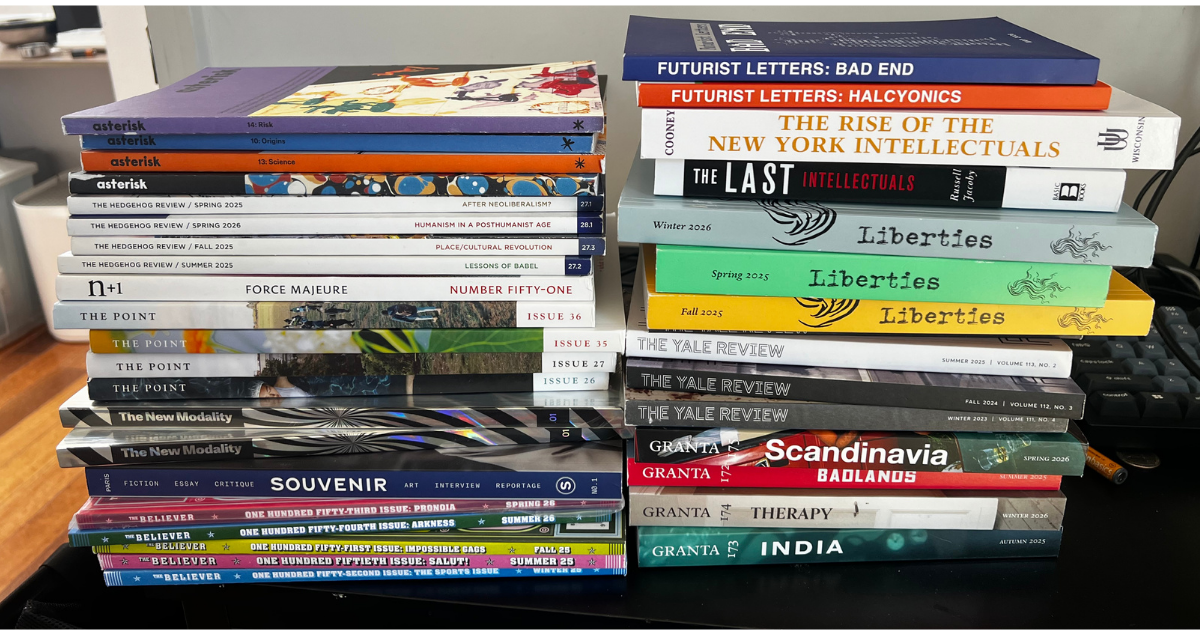
In contrast, there are other journals that don’t really have as high of a reputation: The Metropolitan Review, Republic of Letters, Souvenir, Magazine Non Grata, Futurist Letters, Forever, Heavy Traffic—sceney magazines. And these journals sometimes draw a lot of derision, because they’re run by avid self-promoters, who often make strong claims for the journal.
But these smaller journals are animated by a sense of passion, which makes me think maybe there is some life in them.
These are the magazines that, if you’re an aspiring literary writer, you should read. If there’s any magazine you’ve heard about, that people talk about, then it’s worth reading that journal just to see if it’s actually good.
Then, if you like the journal, you can email the people who’ve published stories in it, and you can tell them their stories are good. You can also try and write the sort of stories that would fit in that journal. And maybe something good will happen.
But of course it’s complicated, because the journal might not want you. That’s one reason I often had trouble, as a young writer, reading some of these journals. It was because I had this history of rejection. I used to love Strange Horizons. It was a journal that I really liked and appreciated. I even read submissions for the journal, so I had a fairly good idea of what the magazine liked. But they still rejected me, tirelessly, for years. So if you invest time in learning about a journal, that time won’t necessarily be rewarded.
However, I think that if a journal is publishing you, then you should probably read it. I regularly read Lightspeed, because that’s the journal which takes most of my sci-fi stories. I don’t read everything they publish—probably not even a majority of things—but I keep current with their work. I am going to be in the upcoming Best American Science Fiction and Fantasy, and it really behooves me to read that as well. If I don’t read it, that’ll be a huge mistake on my part.

Learning from your peers
So when it comes to submitting fiction, I’d say that you don’t necessarily have to read the journals that you’re submitting to. But...you should really be reading something, and, more importantly, you should be making an effort to find out which of your peers are worthy of your respect. Because those are people you can learn from.
Obviously, you don’t learn primarily from your peers. You learn primarily from the great writers of the past. But...these historical writers cannot teach you what it’s like to write in contemporary times. You can’t even learn that from writers of the previous generation. When you read the great writers of the past, you gain a sense of integrity—a sense of what kind of work is worth doing. But this sense of integrity can manifest in many forms. If you read Anna Karenina, you learn what it’s like to write work that’s full of moral conviction. But if you write with moral conviction in 2026, you’re probably not writing a book that outwardly resembles Anna Karenina.
What I’ve learned is that whatever you’re trying to do, someone else is probably trying to do it too. That’s one reason, when I read all these Neo-Bernhardian imitations, I felt so strongly that there was probably some juice in this style of fiction. If so many people are attempting it, then it probably responds in some authentic way to modern conditions.
It’s the same thing with my tales. When I started writing in this form, I definitely perceived the tales as being sui generis, but I’ve realized there is a style of sweeping story, often related with a rather cold affect, that is a clear influence on my tale style. I’m thinking of Ted Chiang’s “Hell Is The Absence of God”, Maureen McHugh’s “After The Apocalypse”, and Tony Tulathimutte’s “The Feminist”. In fact, I think one reason I was drawn to the New Yorker story was that many of the stories in that magazine were also written in a cold, unadorned style that’s similar to my tales.
But it’s good to know that I’m not unique, because that means I can think about whether there’s anything to learn from these influences. For instance, I’ve lately been thinking about an excellent story by Robbie Herbst in The Baffler. “The List” is about an awkward guy who moves to Boston, struggles to make friends, and eventually finds community at a synagogue. In the wake of Oct 7, he joins the IDF, fights in Gaza, and transforms into a sexually-confident lady’s man.
(I was impressed that The Baffler—a left-wing journal—was willing to print a story with such a politically-ambiguous ending, but I guess they correctly assumed nobody would read that far.)
As with my tales, the story is fast-paced, spans considerable time and space, and is told with sufficient narrative distance that you’re never sure how much you’re meant to empathize with the protagonist. In reading this story, I noticed that, like Tulathimutte’s “The Feminist”, it’s in the present-tense. I never write in the present tense, because it traps you into a rigidly-chronological progression and can feel artificial, but perhaps the form has more flexibility than I thought.
What’s great about writing is that you can just steal. Like, you shouldn’t plagiarize, which is the term for stealing other peoples’ work in an illegal or unethical way. But if I do believe that if you ever spot some technique you really admire, you can just try out that thing and see if you can make it work. For instance, I admire that Robbie’s story is firmly situated in a certain time and place, and it has more density of detail than my tales. It’s something I aspire to, but I often get bored by the work of saying where people live and what they do in their spare time, etc. Maybe writing in the present tense would force me to fill out some of those details. Who knows! It is worth a try. On my own, I would never attempt a present-tense story—I would’ve only gotten this idea by paying attention to a talented peer.

The nonfiction side
If you’re pitching nonfiction pieces, you must read the journals you’re submitting to. There is really no getting around it! Now that I am reading all these small journals, I am seeing that they each have quite a unique style. You could pitch the same idea to many of these journals, but it would need to be written differently for each. Like for N+1, it would probably need a first-person element, while for The Baffler, you’d have to include some original reporting, and for The Drift it would need a more polemical tone.
Moreover, each of these journals has some smaller sections that it’s probably much easier to write for. For instance, N+1 has these politics briefs at the beginning that are the weakest section of the journal. It is hard to come up with a fresh political take, and I think ideally they want somebody who has first-person on-the-ground experience with some political thing that’s happening—if you have some direct, geographical connection to an ongoing political event, that’s probably a good way into the journal.
So yes, if you want to be published in these journals, you have to read them. But...do you even want to be published in them?
When it comes to fiction, you usually write the story on spec, and then you look for the right home for your work. But with nonfiction it’s different. You write the piece for the journal. So if you’re writing for a journal, that means you’re allowing their sensibility to shape your talents. Oftentimes, the piece has no life beyond this journal: in the week or month of publication, it’ll be read by some particular set of readers, and then it’ll never again be seen. So it’s worth thinking about whether it’s really worth your time to write for some journal.
Yes, you get paid money, and you get experience working with editors, and you hope that the byline will mean something down the line. But even with all that...it’s a lot of work to produce a nonfiction piece for a journal.
Now that I’ve been reading so many of these little magazines, I’ve come to the conclusion that there’s no point in writing for a journal that’s not good.
And by ‘good’, I don’t mean ‘has a high reputation’. I mean...when you read the journal, the experience should be good. That doesn’t mean every piece ought to be good. But the journal ought to feel honest, like it’s doing work that the editors feel really needs to be done. And they ought to be doing that work in an effective way.
‘Honesty’ means different things for different journals. For Liberties, it means eschewing the internet, while for another journal it might mean purposefully pursuing some internet virality strategy as a way of building subscriber growth. But I think, at the most basic level, it means that there should be some vision underpinning the journal. When it comes to quality, some journals opt for a high-risk / high-return strategy, where most pieces are self-indulgent and overwritten, but some are truly excellent. Others opt for a more heavily-edited style, so that pieces have less individual personality but more consistency. But if it’s a high-risk/high-return journal, then the journal does need to have some breakout pieces. And if it’s a more heavily-edited journal, then it does need to be of consistently high quality. If the journal doesn’t seem like it’s trying to maximize the potential of its format, then I don’t think it’s a good journal.
Anyway, if you’re trying to decide whether a magazine is worth investing in, you don’t need to justify your own opinion. You should just read the journal and then ask yourself if you feel excited by the idea of working with the people who are putting it together. You should feel excited by learning from them and being part of their vision. If that excitement isn’t there, then they’re not worth pitching.
Elsewhere on the internet…
Theo Lipsky had a great piece in The Chronicle of Higher Education about how the Great Books movement drew inspiration from WWI-era military education programs. I’d seen bits of this on his Substack over the past year, but it was fascinating to see it all pulled together.
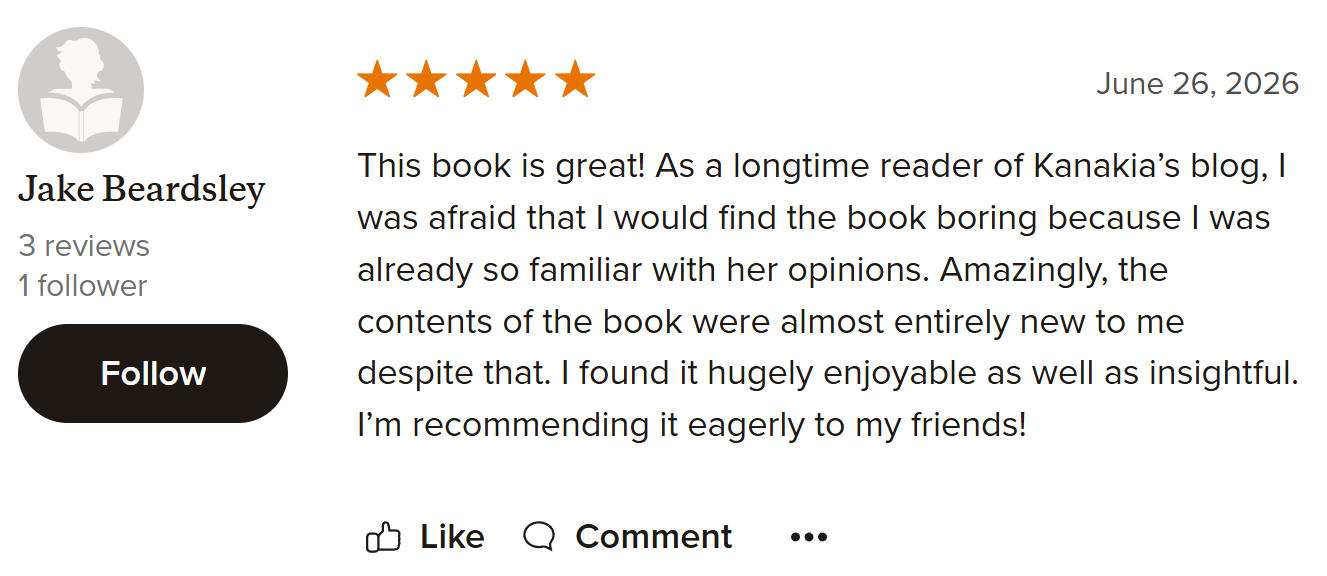
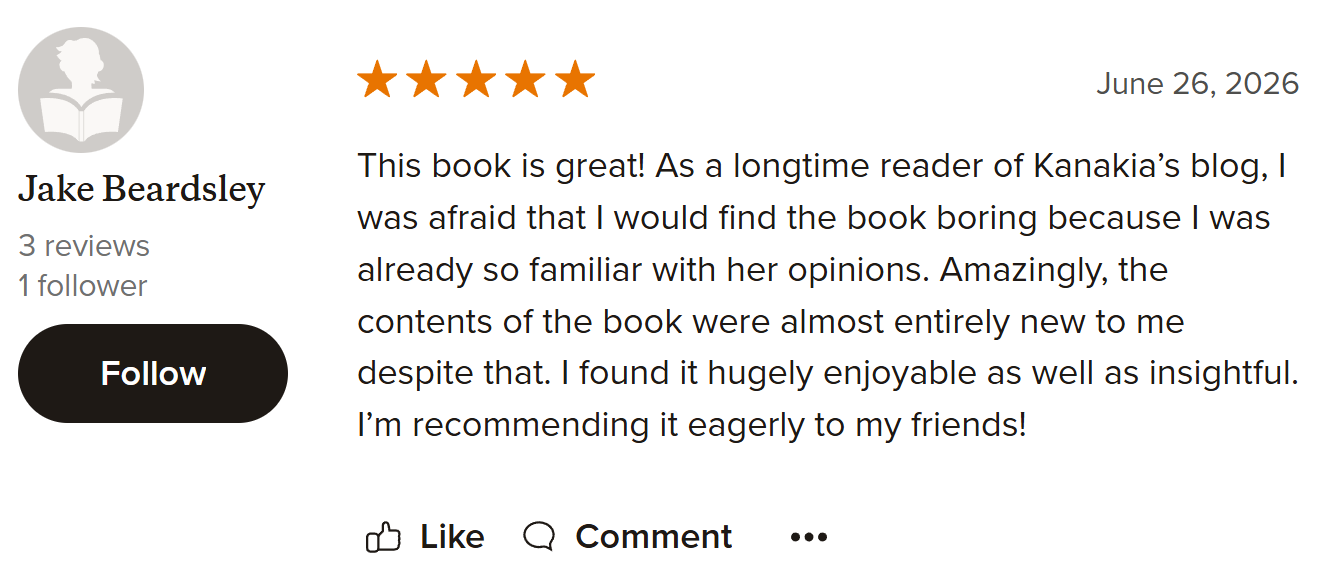
Reviews continue to come in for nonfiction book, What’s So Great About The Great Books?. Here is one from Goodreads that emphasizes what I’ve been telling you guys, which is that there is zero duplication between this book and my blog.
Here are some links to purchase What’s So Great About The Great Books on Amazon and on Bookshop.
I can't tell you the various ways it's gratifying to read this piece, Naomi. First of all, it always feels extremely vindicating to get ANY attention for my fiction (in your terms, you read all the way to the end!), but it's another experience to be read in the way you hope to be read. As I told you, your tales were a direct inspiration for my story, even moreso than the Tony T connection (that people pick up on more quickly).
I agonized over where to submit this story. I wrote it basically in a single day and thought it was the best story I'd written. I worried that The Baffler wasn't a 'good enough' journal for it. But after reading the fiction section, I realized that they meant business. I actually liked the stories there, which is vanishingly rare. Another inspiration for writing was the work of Jasper Nathaniel, who reports from the West Bank, which gave me frankly the rage I needed to write directly about these topics. He writes sometimes for The Baffler, and I felt like their editors would understand what I was doing. J.W. responded very quickly and accepted the story.
I completely agree with your linking this issue to having a peer group. If you can't find the other writers who you see as your equals, with similar concerns and work that impresses you and makes you jealous, then writing fiction will be a very lonely affair!
I recently finished a short story I have been working on for a long time. Never having submitted or published before, I sprayed and prayed to 20-30 journals open to submission at the time drawn from a few of those lists that rank journals based on various awards won. I had the good fortune to have it accepted by a university backed journal probably a tier down from Missouri Review and AGNI--occasionally places some award winners, but not a ton and has published authors I have actually heard of, but not for a long time. My excitement at my first publication has been tempered somewhat by the fact that the story won't be available online. So, unless I hit the lottery and it gets published in an awards anthology or something, the audience for this story will be limited to the editors, some people I know (though not that many since I won't be able to just pass a link around) and the other authors and presumably people they know (to the extent they look at other stories besides the one by their friend).
Now, is the audience for any literary short story (save for ones in Harper's or the New Yorker) ever much larger than that? Probably not. But it's still somewhat depressing that it will be essentially inaccessible for spontaneous discovery by anyone. It's almost like I've agreed to have this story I am very proud of to be buried in exchange for the ability to say I have been published somewhere selective. I have my next story out for submission now and have followed the same sort of process for submission, but I'm wondering if I would find it much more gratifying to be published somewhere with an actual online presence--even if it is not necessarily considered as "prestigious" or wins as many awards--so that I'd better be able to indulge in the fantasy of it having a life of its own beyond my immediate circle after publication.