
Clubs
I am a member of the NYRB Classics Book Club. My wife surely doesn’t know this, and if she realized the implications of this fact, she would be appalled.
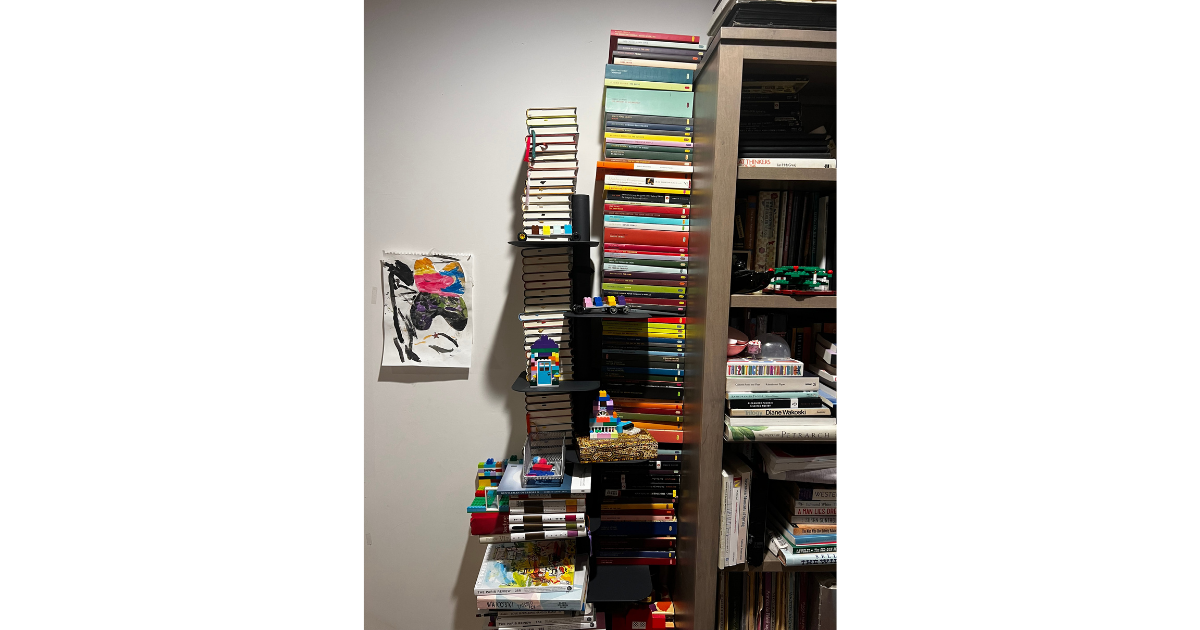
Because my membership in this club means one new book comes to me every month. I have no idea what the book will be, but it’s always a new release in the line of rediscovered classics that the New York Review of Books has been publishing since 1999. And usually when the book comes, I open it, glance at the name, and put it straight onto the top of the tottery vertical shelf that she’s always asking me to ‘tidy up’ because ‘it’s an earthquake risk’ and ‘a danger to our child’.
I’ve belonged to this Book Club for four years now. It’s been a long time. I am a satisfied NYRB Classics Book Club member, and I have no plans on canceling my subscription.
For a time I also belonged to the New Directions New Classics Club, but their books don’t come in a uniform format—you can’t just stack them on a vertical shelf. Their books are also slightly less to my taste. I feel like the New Directions taste is too arty somehow—it’s very associated with modernism, and they really just feel like the books you’re supposed to like. With NYRB, it feels like there’s more brio, there’s more sap. NYRB doesn’t publish these dense modernist books, they weird-but-entertaining books like Lolly Willowes, an excellent NYRB Classic about a lonely woman who makes a deal with Satan or something.
When I open an envelope from NYRB, I always hope I’ll find something like Lolly Willowes—some weird book that is enjoyable and really wants to be read by me. Lolly Willowes is not some fancy book—it was the very first Book-of-the-Month Club pick in 1925.

The first middlebrow book club
The Book-of-the-Month club was a 20th-century institution very similar to the NYRB Classics book club. It mailed one pre-selected book each month to its subscribers (although for BOTMC you also had the option of refusing the pre-selected book and either picking an alternate book or choosing no book at all for that month).
BOTMC’s selections were made by an editorial board composed of five eminences who had a particular combination of popular appeal and literary cachet. Harry Canby was a former Yale professor who edited a literary periodical, The Saturday Review. Dorothy Canfield Fisher (who I’ve written about before) was a best-selling novelist and leading progressive—she was an early proponent of Montessori education, prison reform, and all kinds of other progressive causes. And the other three members were journalists and newspaper columnists (in the mold of a David Brooks or William Safire).
With this club, you paid for the curation. The books were, notionally, books that were good to read and had literary merit of some kind.
I’m bringing up the Book of the Month club because I recently read a book about it, Janice Radway’s A Feeling For Books: The Book-of-the-Month Club, Literary Taste, and Middle-Class Desire. This academic volume, published in 1999, was based on time that the author, a professor at UPenn, spent observing the editorial board of the club in the 1980s.
This volume, A Feeling For Books, did a good job of describing how the BOTMC editorial board conceptualized its own mission.
Okay, so the way the club worked was that publishers would submit forthcoming books to the club to be considered as ‘main selections’. If you were selected for a main selection, then it meant hundreds of thousands of additional sales, and a lot of extra exposure for the book. The editorial board, in going through these books, had two ways of dismissing them. Some books they would dismiss as ‘too academic’. As Radway describes:
Not only was this criticism (”too academic”) repeated regularly thereafter, but the editors occasionally embellished what was, for them, a kind of epithet, by using it in conjunction with modifiers such as “desiccated,” “too technical,” and “highly specialized.”
Other books, they would dismiss as being too much like something that’d get picked by ‘the Guild’ (this referred to the Literary Guild, their chief rival, which they considered too low-brow). As Radway puts it:
I picked up very quickly that, from their point of view, the Guild’s literary province was the inferior world of women’s reading, romances, books on forming relationships and rehabilitating marriages, make-over manuals, and the most salacious celebrity biographies — the publishing equivalent of Phil Donahue and Oprah Winfrey. The Book-of-the-Month Club, they would tell me later, was PBS and the Smithsonian. Their tolerance, clearly, had its limits. And the limits were familiar.
It was so interesting to see how the BOTMC differentiated itself by referring to its two mental rivals. On the one hand, it denigrated the literati, who didn’t care enough about what readers might enjoy. And on the other hand, it denigrated ‘the Guild’, which cared too nakedly about catering to readers’ presumed tastes.
Radway does a great job of showing, in this first section of her book, how this editorial board always tried to find books with mass appeal that also had something extra.
I think we basically understand the kind of book they’re talking about: 1984 was a BOTMC selection, so was Of Mice And Men, Kon-Tiki, Catcher in the Rye, The Rise and Fall of the Third Reich and many books by Herman Wouk, James Michener, Winston Churchill, and others. You know...serious books that aren’t too difficult to read.

Learning to disparage the Book-of-the-Month club
Radway also claims that the BOTMC wasn’t held in high respect by her professors or by a certain subset of literary critics:
…three years into graduate school, I had learned to disparage the club as a middlebrow operation offering only the come-on of free bestsellers to people who wanted only to be told what to read in order to look appropriately cultured.
Although she claims the BOTMC wasn’t respected by academics and critics, she doesn’t actually show us that many reviews where people talk dismissively or take it down. She cites a spate of negative mentions from 1925-27, when the BOTMC was just beginning, and that’s mostly it, aside from a sneering mention in Dwight MacDonald’s 1960 essay “Masscult and Midcult” (He wrote that “midcult is the Book-of-the-Month Club, which since 1926 has been supplying its members with reading matter of which the best that can be said is that it could be worse.”)
However, I think the sparsity of notices might just be typical for the pre-internet era. Today, it would be fairly easy for me to go online and find plenty of people trash-talking Oprah’s Book Club, but in the 1950s perhaps people didn’t necessarily publish these kinds of hot takes, and, even if they did, those articles might not’ve been easy to find in the late 1990s when Radway was writing her book.
Despite the lack of documentation, I find it easy to believe that there were some highly-educated, sophisticated readers who thought the Book-of-the-Month club was middlebrow pabulum.
But...does that mean we are required to take their contempt seriously? Everything has haters. As I’ve just described, the editors of the Book of the Month Club also had contempt for the offerings of a rival book club, the Literary Guild, and for books that were too academic, too literary.
Perhaps because they were guided by their own hater tendencies, these editors had a coherent vision of literature that comes through when you read this book and when you glance at a list of Book-of-the-Month club selections.1 It contains well-wrought, accessible books on a number of topics. Some of the books, like For Whom The Bell Tolls or Isak Dineson’s Seven Gothic Tales, are overtly literary. Others, like James Thurber’s Life With Ross, are lighter reading. Some are weighty historical works, like Rise and Fall of the Third Reich. Others are works of fiction about social issues, like Native Son or Hans Fallada’s Little Man, What Now? And some are just about exciting new ideas, like Kon-Tiki or Arthur Clarke’s The Exploration of Space.
I have read a fair number of the books on their list, maybe about one in thirty of their selections, and they’ve all been pretty good—looking at this list is like looking like a list of old friends. I would love to be reading Marjorie Morningstar or Silent Spring or Working or Darkness At Noon again.

The silent mass of readers
The one thing that’s missing from this Radway book is the voice of the subscribers. We know very little about them or about the reasons they subscribed. In the last third of Radway’s book she recollects her own history with the BOTMC’s selections—she realizes that her local library must’ve subscribed, because she was given a box of books in her teenage years, while she was recovering from a surgery, and this box contained a surprisingly large number of BOTMC selections.
Usually the BOTMC and the literature it selected are grouped together under the ‘middlebrow’ heading. This is a kind of literature that promised to be good, promised to be improving, but which was still broadly accessible. As Radway puts it:
This book, then, is the result of my effort to understand the origins, the substance, the particular promise, and the multiple effects of what has been called middlebrow culture in the twentieth-century United States. That culture was aimed at people like me who wanted desperately to present themselves as educated, sophisticated, and aesthetically articulate.
But Radway’s framing implies that there exists some other different type of non-middlebrow reader—some reader who is just naturally sophisticated without wanting or trying to be sophisticated—a person who reads great literature not because of aspiration, but because of natural affinity. And I really question whether the effortlessly-sophisticated literary reader actually exists.
Like...who is being set up in opposition here to the ‘middlebrow’ reader? Every single person is born not knowing how to read. We learn how to read, and then we start choosing books for ourselves. Then, some of us start seeking out books that have literary merit. How does that happen? Surely not naturally! We do it because we’ve heard some good stuff about literature, and we want to experience that good stuff for ourselves. There is always an element of striving involved.
Secondly, when we call the BOTMC middlebrow, it also takes for granted a certain kind of judgement about 20th-century literature. Right now, in the 21st century, we have collectively agreed that the best 20th-century literature was all this modernist and late-modernist fiction: Faulkner, Ellison, Heller, Pynchon, McCarthy, DeLillo, etc. These kinds of authors generally did not get picked for BOTMC (at least not as main, rather than alternate, selections).
But if you were a reader who actually lived in 1950 and someone asked what’re the best books, it’s very possible you would’ve said, “Dickens, Tolstoy, George Eliot, Jane Austen, stuff like that.” You wouldn’t have said Faulkner, because that would’ve been crazy—that guy wasn’t even dead yet!
So if someone came up to you and was like, “Why are you not reading the best books?” Your answer might very well be, “But I’ve already read Tolstoy. When I want to read the best books, I just go and read Tolstoy”—keep in mind Tolstoy only died in 1910, so he was more recent than Faulkner is to us—“I don’t go to Book of the Month Club looking for the best books, I’m just looking for some recent books that happen to be good.”
We hear a lot in Radway’s book about how the editors of the BOTMC conceptualized it to themselves, but very little about how it was perceived by the readers.
This is not a knock on Radway’s book—she does gesture at the possibility that BOTMC readers had a variety of different relationships to the club. And the truth is that we just don’t know—we don’t actually know how they felt about it.

My favorite middlebrow book club
Which is what brings me back to the NYRB Classics book club. Because while I was reading about the BOTMC club—this middlebrow institution that is situated, in Radway’s book, as being essentially for other people, and not for people like us (the readers of academic books), I kept thinking of the book-delivery service that I, Naomi, actually subscribe to!
Here I was, asking myself why people paid all this money to subscribe to the BOTMC club, and I hadn’t asked myself the very same question. Why do I pay hundreds of dollars a year (I think it’s like $200 a year or so) to subscribe to the NYRB Classics Book Club?
Well, the simple answer is that I have an emotional attachment to this line of books.
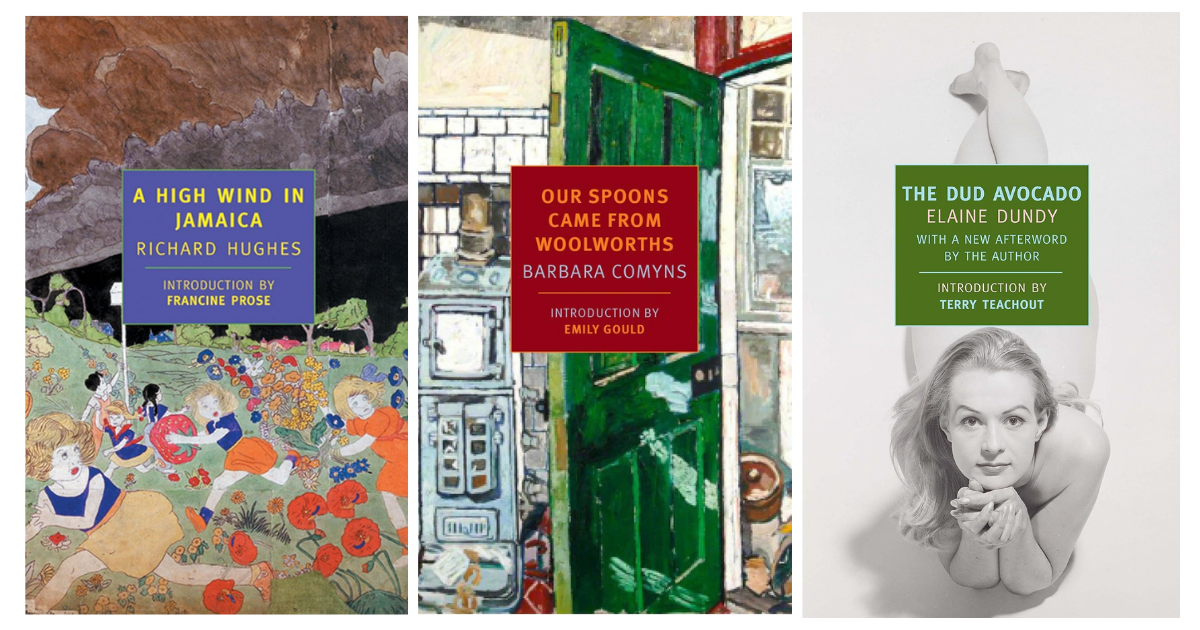
I looked back through my reading log to see the very first NYRB Classics book I read. It was Stoner, in 2012, when I was in the first semester of my MFA. I was twenty-six years old. After that, about a year later, I got very into Austrian and German and Hungarian literature, and a bunch of the books I read were from NYRB Classics: Skylark, Beware of Pity, and Confusion.
After that, I noticed that the NYRB Classics brand was very good (and, moreover, their eBooks were almost always available at the library), so I started searching them out. A lot of these books weren’t necessarily the greatest literary classics on Earth, but they were definitely interesting.
NYRB Classics tend to be relatively short—under three hundred pages—and are usually at least thirty years old. They have a distinct sensibility, but I’d be hard-pressed to define it. I’d say most of their catalogue consists of British and American books that were critically-acclaimed on their initial release, but subsequently fell out of print. These books were well-respected in their day, but then their day ended, and now…who knows…maybe it’s time for that day to come back.2
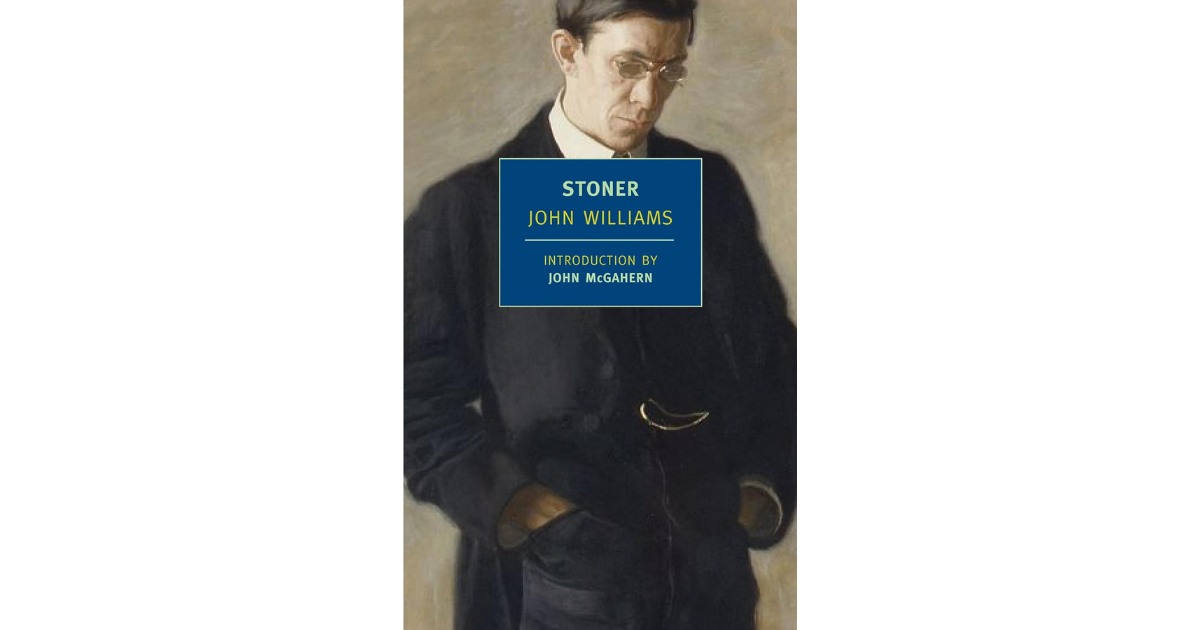
Over the next few years, I read Novels in Three Lines, The Dud Avocado, Lolly Willowes, Angel, A High Wind in Jamaica, Masscult and Midcult, Tristana, The Doll, Rogue Male, The Lonely Passion of Judith Hearn, Making It, Late Fame, Apartment in Athens, Life With Picasso, The Inverted World, Manservant and Maid-Servant, Our Spoons Came From Woolworth, and maybe thirty or forty others.3
In most cases, I enjoyed the books a lot. I absolutely adored Our Spoons Came From Woolworth and The Dud Avocado, but I don’t know that I feel a strong urge to sell them to other people. They’re merely very good books. In other cases, I’ve come to realize that the books were genuine classics that really deserve a place in the canon, like Richard Hughes’s A High Wind in Jamaica—this novel is so dark and unsettling. It’s about these four kids who get kidnapped by pirates and kind of go native, becoming piratical themselves, but in a very dreamy, hard-to-describe fashion (this novel was a major influence on my short story “Lonely Island Adventures”).
And in a few cases, these reissued books had a big influence on the culture at large. Dwight MacDonald, the famous snob that I am constantly bringing up whenever I talk about middlebrow literature, was completely out of print until his work was reissued by NYRB Classics in 2011. Every time you see his essay “Masscult and Midcult” mentioned by a literary critic, it is because of this 2011 essay collection. All of us, all of us millennial literary critics, who were all in grad school at the same time, we all discovered NYRB Classics at the same time, and we all read this very same essay collection! In retrospect, this release was a huge deal, although I certainly wouldn’t have known it at the time.
A few years ago, I got to thinking that now I have more money, I really ought to support some small presses, and that’s when I remembered that NYRB Classics had a book club.

“Stoner is…not very good at all”
NYRB’s most controversial book is also its best-known and most successful: Stoner. This is a 1965 novel by John Williams, a professor of creative writing at Denver. According to Wikipedia, it sold fewer than 2000 copies in its initial run. Then it was reissued FOUR times, as a paperback in 1972 (by Pocket Books), and then again by a university press in 1988, by Vintage in 2003, and finally by NYRB Classics in 2006.
Since being reissued by NYRB Classics, it has apparently sold two MILLION copiesm according to this Airmail article. Which seems wild! This is a book that got plenty of chances—so why did it finally, on its fourth reissuing, catch fire?
Moreover, it didn’t really happen right away. NYRB Classics republished the novel in 2006, but the book didn’t really take off until 2011. The story is explained by this NPR article: What happened was a French novelist, Anna Gavalda, translated it into French. She is a well-liked novelist in France, so once other countries saw her name attached to the translation, they also bought translation rights, and it became a bestseller in Europe. Only then did it come back across the pond to America—I must’ve heard about it because of all this European buzz—and become a hit over here, in a phenomenon (which Williams’s biographer called “Stoner-mania” that was written about later that year by the New Yorker.
Since then, there’ve been a number of attempted Stoner takedowns. Many people have argued that this book is overrated. That it’s mediocre. Or, worse, misogynist! BDM wrote a whole essay about how John Williams sucks (“Stoner...has the interesting distinction of being, despite all this recent advocacy, not very good at all. None of Williams’s books are very good, in fact.”)
Katherine Coldiron wrote another takedown in a similar vein:
“In sum, Stoner is a minor novel by a minor writer...A scan of the NYRB Classics list shows that male names outstrip female names; the same editors who chose to put two editions of Stoner into print within ten years choose mostly men from the annals of out-of-print literature to reissue and promote.”
And Daniel Falatko has posted on Substack Notes that Stoner‘s success is all due to marketing, not organic word of mouth at all.

Stoner is so good
The book is about this Midwestern farm kid who goes to college, discovers a love of literature, becomes a college professor, and leads a sad, quiet, somewhat thwarted life, that’s marred by his wife who doesn’t really get him. The only bright spot is his affair with a student. Then he dies one day, and he is forgotten forever—an event that is described in the very first chapter, by the book’s second paragraph (“Stoner’s colleagues, who held him in no particular esteem when he was alive, speak of him rarely now”)
I loved Stoner. I even played a small part in Stoner-mania by giving it to my professor, Alice McDermott, for our MFA Secret Santa, and she then recommended it on The Millions in 2013:
I began the year with a gift from one of my students, Stoner, by John Williams. I was, perhaps, somewhat late in discovering this marvelous novel of university life, first published in 1965, but I’m grateful now to have had the experience of it, to have lived William Stoner’s life: to have been the shy farm boy entranced by the power of literature, the earnest professor, the long suffering spouse and the doting father, the middle-aged lover surprised by joy. It is a kind of enchantment, to be lured so completely into the life of this character.
Anyway, Stoner is a quintessential NYRB Classic because...it’s just a good book that didn’t succeed the first time (or second, or third) time around. Reading the book, you can’t really figure out why it didn’t work out back in 1965. It’s not representative of some difficult modernist trend that the public wasn’t ready for. It’s not a book that’s ahead of its time. It’s just...a book that suffered bad luck.
Because of this, it’s also hard to make a case that the book was underrated. Probably there are many books that deserve to blow up like Stoner. I love A High Wind in Jamaica just as much as I liked Stoner, but A High Wind in Jamaica hasn’t sold nearly as many copies. Like, there’s no real narrative you can attach to Stoner‘s late-in-life success. And that’s why it’s easy to argue that the book is overrated and doesn’t really deserve this level of attention—a claim that could certainly be leveled, as Blake Smith did in a memorable essay for Tablet, against the NYRB Classics as a whole.

Always good, sometimes great
But I don’t think the readers of NYRB classics actually go into these books thinking they’re going to be timeless classics—nor does the editor, Edwin Frank, claim that he is raising these books to some kind of canonical status.
What makes the NYRB Classics work as a whole is that they’re very consistently entertaining. It’s really the consistency that sells them—they’re almost never boring.
Moreover, because you’re usually unfamiliar with the context for the book, it comes at you with outside-of-time feeling. For instance, I understand now that there was a bohemian scene in England in the 1920s and 1930s, and people were making all kinds of radical experiments in how to live and love differently, but when I read Barbara Comyn’s Our Spoons Came From Woolworths ten years ago, I didn’t know this, so it was a bit shocking to read this depiction of a woman, a painter, raising her two kids amidst am atmosphere of license and free love (and terrible privation).
Moreover, there’s now a culture around these NYRB Classics, so each new release actually gets a fair amount of press coverage. Just this month, they reissued Robert Coover’s Universal Baseball Association, and I see it’s gotten reviewed in The New York Times and Harper’s—a lot of contemporary big-budget novels don’t manage the same amount of coverage. So if you read these books near the time of release, then you also have the potential to be part of some kind of zeitgeist.

Not really classics
It’s been interesting to see Edwin Frank repeatedly duck the question of whether these books are actually classics. For instance, in this interview with New American Studies Journal, his interlocutor begins with some quotes from Italo Calvino’s “What is a Classic” (about how a classic can be read again and again) and asks Edwin Frank if theese quotes describe his motivations for starting NYRB Classics.
Frank replies:
Well, really the series was started to give people a chance to read books that they couldn’t read, either because they’d been put out of print or never translated. And yes, some of those books were books that I thought should be out there for people to read and read again, but they were for all that little-known. So it’s a rather different situation.
To me, this makes perfect sense. All of the books in the NYRB classics are books that people should be able to read, because they’re good books. Some of the books are also classics—books that reward re-reading and deserve to endure because of their literary merit. But the purpose of the imprint isn’t necessarily to perform some canonization or anointing function.
I think he put it best in an interview with The Point, where he said NYRB Classics puts “old wine in new bottles” and performs a recirculating function, bringing books back into the public eye for a time. In that same interview, he says that he doesn’t really regard Penguin Classics or Oxford Classics as rivals, because his aim isn’t to publish canonical classics.
It’s clear, both from these statements and from the types of books that they publish, that there’s a modesty to NYRB Classics. They would be happy to have an impact on life, literature, and letters, but their aim is to provide books that a certain kind of reader will enjoy.

The competition
New Directions, the chief rival to NYRB, operates quite differently.
For one thing, New Directions has a strong focus on modernist and post-modernist 20th-century literature. They don’t republish many 19th or even early-20th century books.
But, more importantly, they’re most known for making a strong commitment to republishing a lot of work by the authors that they publish. Where NYRB usually does just one or two books by a given author—it is much more the norm at New Directions to republish, or attempt to republish, a substantial fraction of the author’s ouevre.
If you look at just books that both presses have published since 1999, you can see that although New Directions has published more books (904 vs. 716), it’s published fewer authors (349 vs. 460). There are 66 authors that New Directions has published 4+ times (since 1999), and these 66 authored more than 50 percent of the books its published in this period. In contrast, NYRB only has 33 such authors, who’ve authored 25 percent of its catalogue.
Moreover, there are 9 authors that ND has republished more than 10 times; NYRB only has one such author (Georges Simenon). For ND, those nine authors are:
Tennessee Williams — 32
César Aira — 22
Muriel Spark — 17
Roberto Bolaño — 16
Clarice Lispector — 14
László Krasznahorkai — 13
Susan Howe — 13
Yoko Tawada — 13
Javier Marías — 12
And this is just counting the authors they’ve published since 1999!
It feels to me like New Directions is much more committed to influencing canon-formation than NYRB is. That’s because it’s much easier to study an author if you have a lot of their work available and in print. I am finding this right now with a piece I am writing on Thomas Bernhard—because of the efforts of one editor at Knopf, Carol Janeway, a lot of his work is available in print in English, and this means it’s a lot easier to read and characterize his body of work as a whole. Whereas if all you have is access to one or two of an author’s top books, it’s hard to come to a conclusion.
Moreover, republishing a lot of work by one author is really beneficial when it comes to reputational dynamics in the English-speaking world. That’s because every time a book comes out, there’s any spate of reviews (hopefully) in NYRB, LRB, TLS, NYT, New Yorker, and in the smaller LARB and Cleveland Review of Books style journals. And each time a book comes out, people will be incentivized to go back and read some of the earlier books. Over time, by bringing an author repeatedly into the public eye, you increase their name-recognition amongst people who care about this kind of thing. For instance, I had definitely heard of Osamu Dazai and Cesar Aira before, but my feeling is that their critical reputation has grown significantly, in the US, over the last ten years precisely because New Directions has brought out so many more of their books.
New Directions’ approach is really geared not to the general reader, but to the critical apparatus that evaluates various sub-canonical writers—they are publishing not for today, but for posterity.

Not sold on New Directions
ND is a great press, and I fully support it. But...not with my money.
I mean, I support it with my money too, when they publish an author like Fleur Jaeggy or Roberto Bolano that I actually want to read. But...I don’t know...during my year of belonging to their book subscription service, New Directions sent me a collection of Cesar Aira’s short stories, and I was like...hmm...If I was going to start reading Cesar Aira—an author I’ve never read before--I would likely not start with this book, which was the tenth[!] book of his that they’d published. So, given that’s the case, why should I keep this book in my house?
New Directions is making a bet that there are some authors in translation who will be considered essential in fifty years—the kinds of authors that will someday be reissued by Penguin Classics—but in order to get to that place in the English-speaking world, they first need to be widely-available in America. That’s a great bet, but...I personally am not in the business of evaluating whether Cesar Aira or Osamu Dazai ought to be the next Borges or Kawabata. That’s just not a strong interest of mine. I personally do not really enjoy making judgements about whether semi-canonized authors ought to be more-canonized than they are.4
There is a type of person who really likes this sort of thing! They want to be in on the ground floor with some new(ish) author.
This type of person tends to really love 20th-century literature. And many of these people really love a certain kind of late-modernist literature. They don’t read a lot of 19th-century literature. They’re not into antiquity. They’re not into popular literature. They just like this very self-consciously high literature. And they love ranking these various authors against each other and trying to figure out who’s truly great.
And I can easily imagine this type of person wondering why New Directions reprints don’t seem quite as popular NYRB Classics. This type of person might think, “Oh, folks love simple, easily-digestible American writers like John Williams and Eve Babitz, they don’t care about reading these other truly innovative writers who are often writing in other languages and whose work isn’t as easily legible to the contemporary American reader.”
In other words, they might say that NYRB Classics succeeds because it is more middlebrow than New Directions. That NYRB Classics offers the thrill of discovery, but none of the effort of discovery.

It’s a miracle when something good actually exists
Personally, I just think...New Directions and NYRB Classics are a little different, and they’ve each created a slightly different culture around themselves.
The reader who feels strongly invested in NYRB is like probably somewhat like me—their major reading interests probably lie with the established canon, and when they venture outside the canon, they prefer something shorter and easier, but which still has literary merit and the potential for canonicity.
The New Directions reader is more adventurous, in a sense, more willing to give a lot of their time and energy to authors, like Osamu Dazai and Cesar Aira, that haven’t quite reached the same canonical status as, say, Yasunari Kawabata or Jorge Luis Borges.
But I don’t think this adventurous quality makes the New Directions reader more highbrow. You could easily say that it makes them less highbrow, because they’re paying less attention to books that we really know are good (i.e. the real canon, the real classics, the great works of antiquity and the Renaissance and the Enlightenment) and more attention to authors who will quite often prove ephemeral.
Arguments about who is better or worse—these arguments seem to miss the point. And, to me, the point is that it’s a miracle when something good even exists at all!
Both NYRB Classics and New Directions could easily not exist. They could be gone, defunct, closed. This is the point that Renata Adler made in her excellent book about The New Yorker. She wrote:
_”_An audience, for anything in the arts, does not pre-exist. It is part of what is created. When the audience for what had been The New Yorker dispersed, while the pollsters were trying to determine the preferences of some imaginary, pre-existing and statistically desirable new readership, there was really no New Yorker left.”
Similarly, the readership for these book clubs, whether ‘of the month’ or NYRB or New Directions cannot be neatly categorized. None of these book clubs taps into a pre-existing audience. They all create their own audience, by awakening, in a certain subset of people, a demand for something that they didn’t know they wanted. It’s the same thing that’s true of every magazine and every newsletter—they enter into a reciprocal relationship with their readers, where they both define and are defined by the reader’s taste. Hopefully, that relationship turns into something unique, that the reader isn’t able to get anywhere else.
I think it’s very valuable to study the nature of the relationship between publisher and reader, and the ways that this relationship can be used to advance the cause of literature. But I don’t think it’s very informative to treat that relationship as if it’s a simple matter of fulfilling some person’s inchoate desire to be filled up with culture.

A sign of the times
You also have to be careful when you use the existence of a literary phenomenon as some synecdoche for the times. With something like Book of the Month Club, we know that it existed and that it had subscribers, but don’t know whether its existence was reflective of some underlying shift in society that was any more complicated than “the postal system got better and now it was possible to order books by mail.”
I think it’s true that in our society, many people want to experience culture. And this aspiration has led to the existence of many different phenomena, from the humanities degree to the general-interest magazine. But the rise and fall of these phenomena isn’t necessarily indicative of a rise or fall in peoples’ underlying desire to experience culture. Like...book review pages in newspapers are in decline, but is that because people are less interested in book reviews? Or is it because digital metrics mean we can see now that people were never that interested in them? Or is it that the format of the digital (as opposed to the paper) newspaper means you have fewer and fewer of the type of person who just sits down and reads everything in the paper, so it makes less sense to pad it out with lower-performing content.
You can’t really say, because you don’t actually know what kind of relationship people used to have with book reviews.
And we face the same problem in talking about the BOTMC, where we really want to say something broader about the public’s relationship to this corporation that mail them these somewhat-ponderous, serious books, but...we don’t actually know the nature of that relationship. All we know is that people seemed to value that relationship, at least insofar as being willing to pay money for it. But not so much that anyone was willing to write the kind of encomia for BOTMC that I’ve now written for NYRB.
That, to me, is the test of whether something is good. If someone is willing to put some effort into writing about it, and characterizing it, then it was probably good. Because of Radway’s book, we know something now about BOTMC. It’s clear she felt a lot of affection both for the book club and for the type of literature that it published. And because she put in that effort, she’ll always, for the rest of time, have the final word on whether it was good:
For me [as a fourteen year old girl] middlebrow books accomplished many things. They staved off loneliness and peopled an imagination starved by enforced isolation. At the same time they preserved desire by delineating objects I might aim for at the very moment when I felt crushed by the necessity to contain every familiar want I had ever known, the desire to hang out with my friends, to ride downtown, to make the cheerleading squad, to go to a dance. Less immediately, perhaps, they surveyed, mapped, and made sense of an adult world. They described that world as one where the irreducible individual was a given, where knowledge was revered, and where expertise was to be sought after with intensity and a sense of purpose. They provided materials for self-fashioning as a result, and models to emulate. In the end they fostered my entry into middle-class selfhood and pointed me in direction of the professional middle class.
Definitely not how I would’ve chosen to end the book, because it really portrays these books-of-the-month in highly instrumental terms, as a function of class-formation, and this is not my preferred mode for describing books. I would much prefer if she’d opined about whether this middlebrow literature was good as literature.
However, if anyone ever did a sociology of literature type study on the NYRB Classics. I’d really hope that they would end the book differently, in a way that foregrounded the pleasure the books brought and the value they provide for shaping literary taste. I would hope they said something like the following:
Nowadays, in the year 2075, the NYRB Classics line is mostly famous for republishing this really great novel called A High Wind In Jamaica. You of course have all heard of this book, because it is world-famous, taught in school, universally-beloved—it’s almost impossible to believe there was a time it wasn’t well-known. But...NYRB Classics also published lots of other books. And these other books didn’t necessarily become as famous as A High Wind in Jamaica. You might think—why did they even bother? Why not just publish books of High Wind-level quality and nothing else? Well that’s a complicated question, but...basically...once upon a time people didn’t even know that High Wind was better than all the other NYRB Classics. They thought it was just another amusing mid-century novel, of a type that NYRB had become famous for republishing. You see, that’s the thing about this press. People read these books, because the books were like classics, but they weren’t classics. And that meant the emotional experience of reading them was a bit more relaxed than when you read an actual classic.
For instance, at the same time as I was getting into the NYRB Classics, I was reading Thomas Mann’s The Magic Mountain. I think that I liked this book, but it was definitely an effort to read. I would not have read The Magic Mountain if it wasn’t a Very Important Book. So then, at this exact same time as I was brute-forcing Thomas Mann, it was such a joy to also have this stockpile of books that were also old and had many of the characteristics of VIBs, but upon which I was more free to exercise judgement. I could read them if I wanted, and I could respect them to exactly the degree that I thought they merited respect. These NYRB Classics were a source of ready entertainment that I could truly possess and call my own, in a way that I couldn’t possess—at least at that moment—the actual classics. And then sometimes, as with High Wind in Jamaica, you realized the books were real classics all along.

Elsewhere on the internet
Abra McAndrew has selected The Wayback Machine as her favorite of the Samuel Richardson finalists:
I picked The Wayback Machine for top billing from among the other contest entries because it most legibly draws upon its premise to fictionalize the kind of inescapable human dilemma that’s the stuff of great literature: “I wasted time and now doth time waste me.”
And T. Benjamin White has written a review of my forthcoming book What’s So Great About The Great Books?
If you’ve read Naomi’s literary newsletter, Woman of Letters, you’ll know that her great strength is in cutting through the noise. There’s so much broad theorizing in literary discourse and breezy pontificating in book reviewing; these can be fun, but they often mean very little, weightless and flighty enough to turn any reader into a Captain Beatty. Naomi doesn’t do this. Everything she writes (in her nonfiction) is a pointed argument, laser focused on trying to understand and clearly communicate what is actually happening here?
I found the spreadsheet of BOTMC selections on this reddit thread. My New Directions data came directly from this catalog on their website.
As a sideline, NYRB also publishes a few translations of 19th and 20th-century classics—books that have a strong reputation in their country of origin but never found a readership in America. However, they don’t do nearly as many books in translation as their competitor presses: Deep Vellum, Dalkey, New Directions, or Archipelago. NYRB also publishes some original and newer releases under their non-classics line, but I haven’t read many of these, other than Vincenzo Latronico’s Perfection.
Although I don’t often link to posts published before 2024, my blog’s archives go all the way back to 2008. Click through if you want to see my original posts about Angel, Beware of Pity, Confusion, The Doll, The Dud Avocado, High Wind In Jamaica, The Liberal Imagination, Life of Lazarillo de Tormes, Life With Picasso, Lolly Willowes, Masscult and Midcult, Novels in Three Lines, Our Spoons Came From Woolworths, Ride a Cockhorse, Skylark, Stoner, Tolstoy, Rasputin, Others, and Me, and Warlock.
It might seem cavalier to talk about ‘canonizing’ an author like Dazai who is already quite famous in his home country, but there is also a global canonization process that only begins once an author is widely-available in English. As Andras Kisery put it: “Translation into a central language tends to pave the way for, and even prompt translation into peripheral languages—in other words, central languages serve as gateways for translations into other languages.”
"It’s much easier to study an author if you have a lot of their work available and in print": the importance of this fact is hugely underestimated. So underestimated that much of the literary world isn't even aware of it.
I've been writing about neglected books for almost two decades now, and no matter how good the books are or how well I've written about them, the reality is that it's all meant bupkis in terms of influencing the literary world: critics, academics, publishers, and readers have all, overwhelmingly ignored them. If you want to inject a writer's work into the discourse, it has to be in print.
I wrote this piece two years ago in response to an Op-Ed piece in the New York Times by Apoorva Tadepalli titled “We Need to Read the Forgotten Geniuses, Not Rescue Them.”
https://neglectedbooks.com/?p=10205
Tadepalli writes that “Critics play a role in determining which books published today should be branded ‘instant classics,’ which authors are best described as ‘little-known’ and which books published in past decades or centuries merit re-examination.” But that presumes that the books are actually published -- or republished, in the case of re-examination.
Zora Neale Hurston isn't part of the canon today because Alice Walker wrote about her in 1975. She's part of the canon because the University of Illinois Press reissued Their Eyes Were Watching God in 1978 and Alice Walker's article and subsequent articles led to Virago Modern Classics picking it up in 1986 and Harper Perennial putting it in Waldenbooks all around America in 1990. Would Hurston be in the Library of America today without the initial commitment by the University of Illinois Press back in 1978?
There is an excellent book that asks just such what-if questions about some of the masterpieces of Latin American fiction of the 1960s--why did One Hundred Years of Solitude become a global classic when The Obscure Bird of Night (for example) was largely ignored?: Ascent to Glory by Alvaro Santana-Acuña. Timing, luck, and the decisions of publishers play a significant role in shaping what we consider literature -- like it or not.
A how-to book I published in 1988 with Harper & Row was selected by both the Book of the Month Club and the Quality Paperback Book Club. This was a huge factor in the book remaining in print for more than two decades and sending me royalty checks twice a year. And I can tell you that never once - not even among the snobbiest literati - did I hear of anyone turning up their nose at the book or at me for an association with BOMC and QPBC.